
A commercial renovation can lose days before the new work even starts. Old flooring that will not lift, stubborn adhesive, fixtures left in place, and rubbish building up in accessways all slow down the trades that follow. Professional commercial strip outs clear that bottleneck, turning a tired or vacated space into a safe, workable site ready for its next fit-out.
For office managers, builders, landlords and business operators, the goal is not simply to remove what is old. It is to hand over a clean, prepared area with the right surfaces exposed, the right materials removed and no unnecessary damage left behind. That takes planning, suitable equipment and a crew that understands how commercial sites operate.
What commercial strip outs involve
A commercial strip-out removes the elements of a property that are no longer needed before refurbishment, reconfiguration or demolition work begins. The scope varies widely. A small retail tenancy may need carpet, vinyl, shelving, counters and wall linings removed. An office floor may require workstations, partitions, ceiling tiles, kitchen joinery, floor coverings and adhesive residue taken out. Hospitality venues often involve heavier finishes such as ceramic tiles, commercial vinyl, epoxy coatings, fixtures and kitchen areas.
The best approach depends on what stays. In many projects, the existing slab, base building services, structural walls or selected joinery must be protected. A strip-out crew needs to work accurately around those retained elements rather than treating the whole tenancy like a demolition zone.
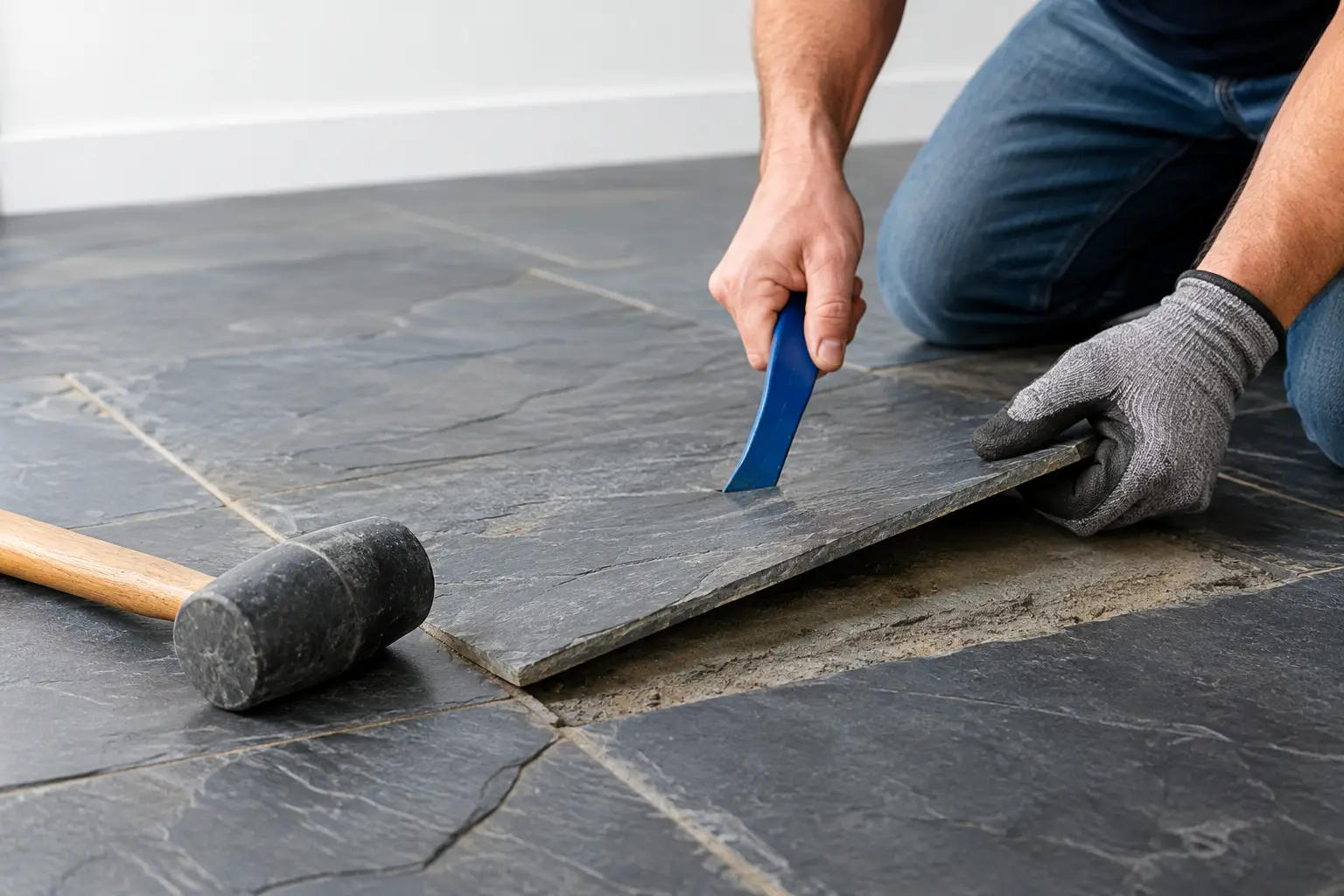
Floor removal is often the part that dictates the programme. Tiles may be bedded heavily into a concrete slab. Timber, vinyl and carpet can leave behind glues that prevent new flooring from bonding correctly. Epoxy and coatings may need mechanical removal and slab grinding before the substrate is suitable for the next trade. Removing the visible surface is only half the job if the floor underneath is still contaminated, uneven or covered in residue.
The hidden risks behind a quick removal job
Commercial sites can look straightforward at inspection, then reveal problems as soon as removal begins. Moisture damage under floor coverings, multiple layers of old finishes, loose screed, concealed services and poor previous installations are common. These issues do not always mean the job becomes difficult, but they do mean the crew needs a clear method for adjusting without compromising the site.
Dust is another major consideration. Breaking up tiles, grinding adhesive and removing coatings creates fine material that can travel through a building quickly. In an occupied office, a shopping centre tenancy or a shared commercial complex, uncontrolled dust is not acceptable. Proper dust-control equipment, containment where required and regular clean-up protect neighbouring tenants, building systems and the people still working nearby.
Access also matters more than many clients expect. A ground-floor shop with direct loading access is a different job from an upper-level office with lift restrictions, limited parking and strict building management rules. Lift bookings, loading dock times, waste removal routes and noise windows need to be organised before tools arrive on site. Good preparation prevents the crew from standing around waiting for access while the project clock keeps running.
There is also a clear safety line around hazardous materials. If there is any concern about asbestos-containing materials or other hazardous substances, the area must be assessed and managed through the correct process before general removal starts. No renovation programme is worth cutting corners on compliance or worker safety.
Why sequencing makes commercial strip outs faster
Fast work is not rushed work. The quickest commercial strip outs are properly sequenced from the start. Loose furniture, fittings and non-fixed items are removed first, followed by joinery, partitions, ceilings and floor finishes in an order that keeps access open and avoids rehandling waste.
For example, removing a floor before bulky fixtures are taken out can leave the crew dragging heavy items across a freshly prepared slab. Pulling down wall linings before confirming which services are isolated can create avoidable risk. The right sequence protects the retained building fabric and gives each stage room to happen efficiently.
Isolation is a key part of this process. Electrical, plumbing, gas, communications, fire services and air-conditioning components may all be present in a commercial tenancy. The strip-out team works within the agreed scope, but any service that could be affected needs to be identified and dealt with by the appropriate qualified trade. Clear communication between the builder, property manager, client and removal crew keeps those responsibilities visible.
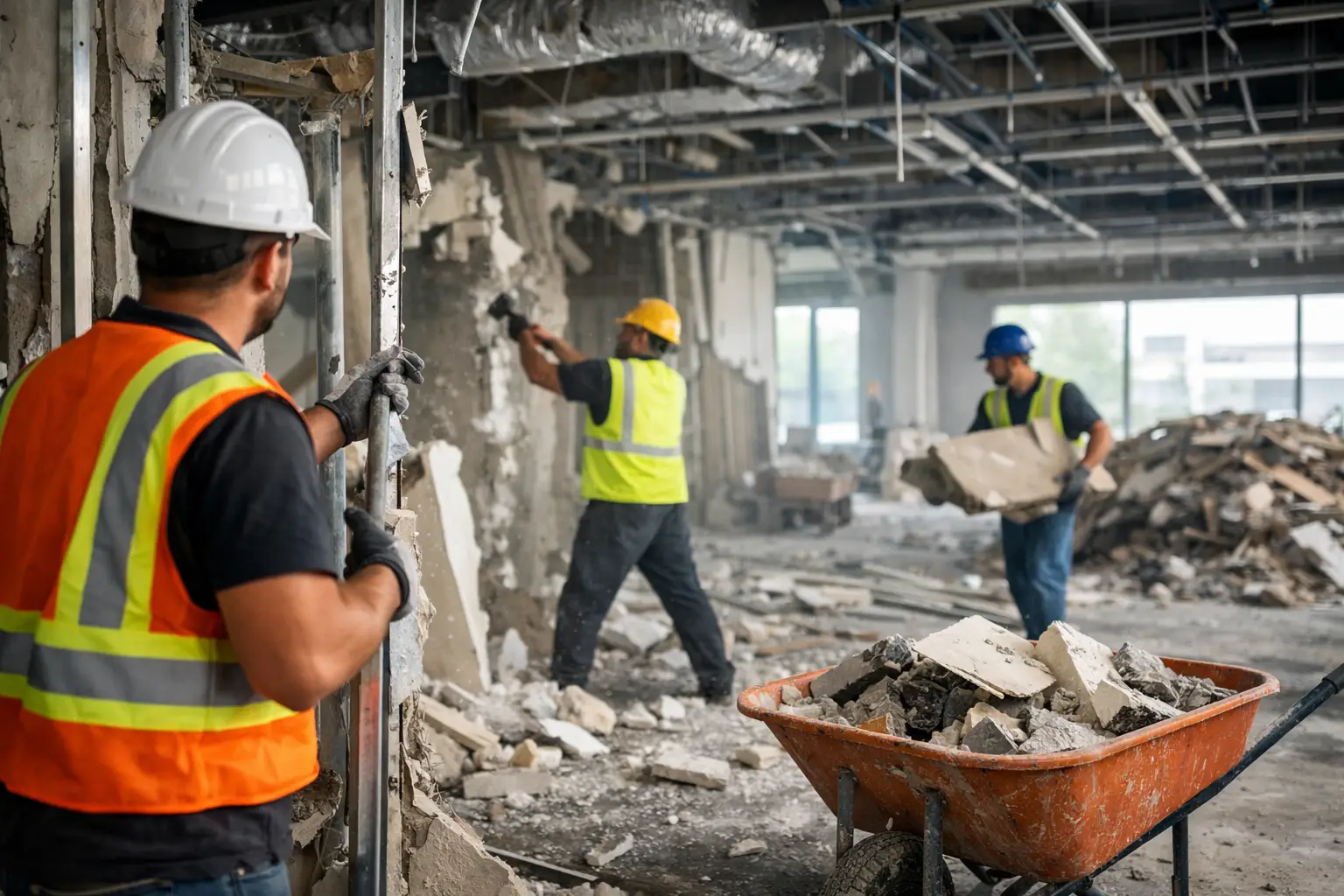
Waste should move continuously rather than becoming a pile that blocks the job. Segregating materials where practical, maintaining clear walkways and removing rubbish progressively helps the site stay safer and easier to work in. It also gives the client a clearer view of progress at the end of each shift.
Floor preparation is where the next trade wins or loses time
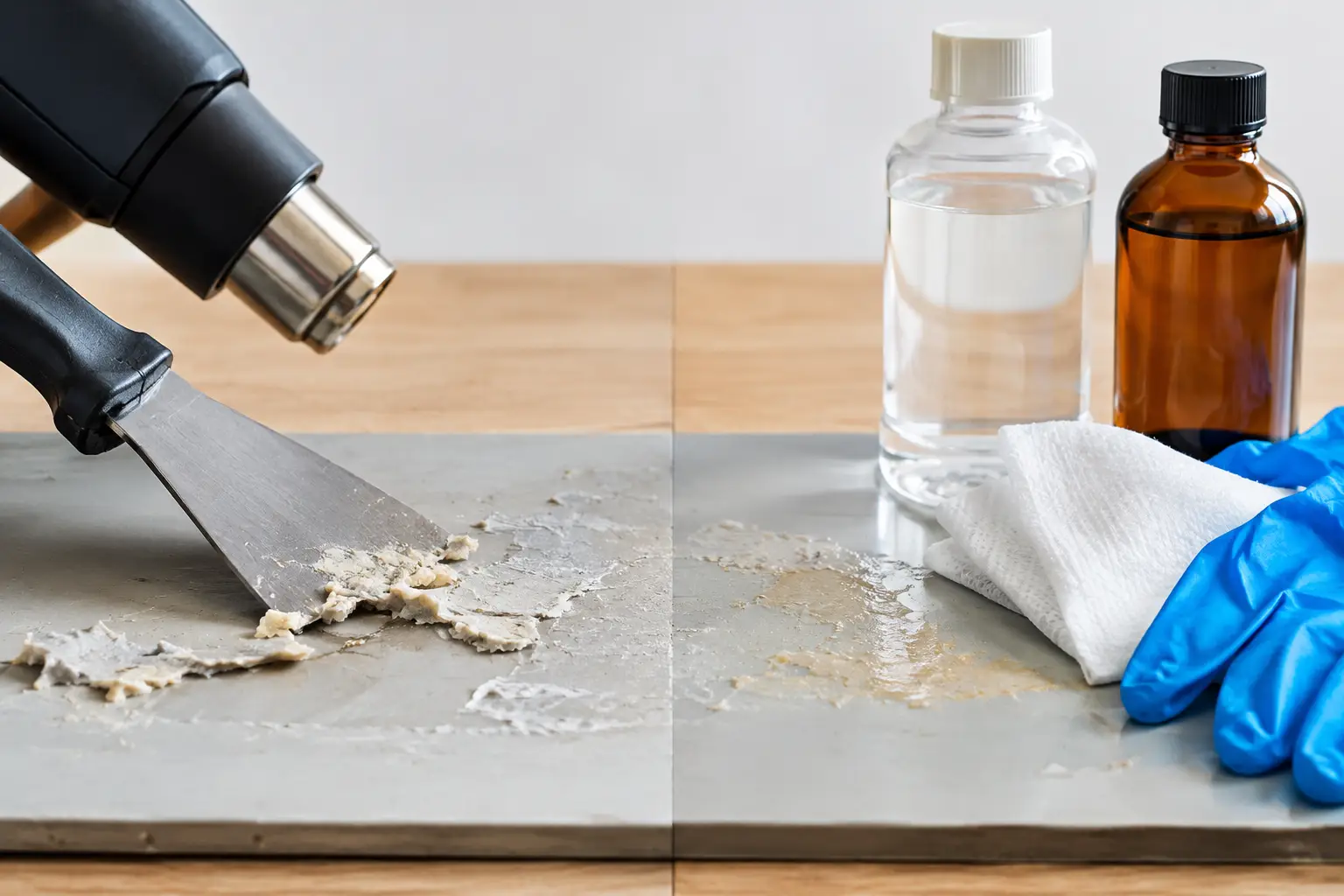
A floor can appear bare and still be unsuitable for installation. Adhesive ridges, tile bedding, paint, levelling compound and high spots can all affect new carpet tiles, hybrid planks, vinyl, timber, epoxy or tiling. If these conditions are ignored, the flooring contractor may have to stop, prepare the slab and reschedule the installation.
That is why slab grinding and detailed adhesive removal should be considered during the strip-out stage, not as an afterthought. The required finish depends on the next floor covering. Some systems need a clean, smooth surface with minimal residue. Others may tolerate more variation, provided the surface is sound and properly prepared. The point is to confirm the next step before deciding how far removal needs to go.
This is especially relevant in retail and hospitality projects where opening dates are fixed. A tenant cannot trade on a floor that is still being scraped, patched or cleaned because the original removal scope stopped too early. Getting the slab ready at the right standard helps every trade after it work to programme.
Working around active businesses and shared buildings
Not every commercial strip-out happens in an empty building. Medical suites, offices, retail centres, schools and hospitality venues can remain partly operational while work is underway. In these settings, disruption needs to be managed as carefully as the physical removal.
Noise, dust, delivery access and pedestrian movement all need practical controls. Sometimes the answer is completing the noisy work outside business hours. Sometimes it means staging the job in sections so staff can continue using part of the premises. It depends on the building rules, the work area and the deadline, but the crew should be able to work to an agreed plan rather than forcing the site to adapt to them.
A professional team will arrive prepared, keep the work zone contained and leave the area tidy at the end of the day. For many jobs across Northern NSW, the Gold Coast, Brisbane and the Sunshine Coast, Rapid Stripped can complete the removal work within a day. Larger or more complex projects may take longer, particularly where access restrictions, extensive flooring or staged works are involved. What matters is setting a realistic programme and keeping it moving.
What to confirm before the strip-out starts
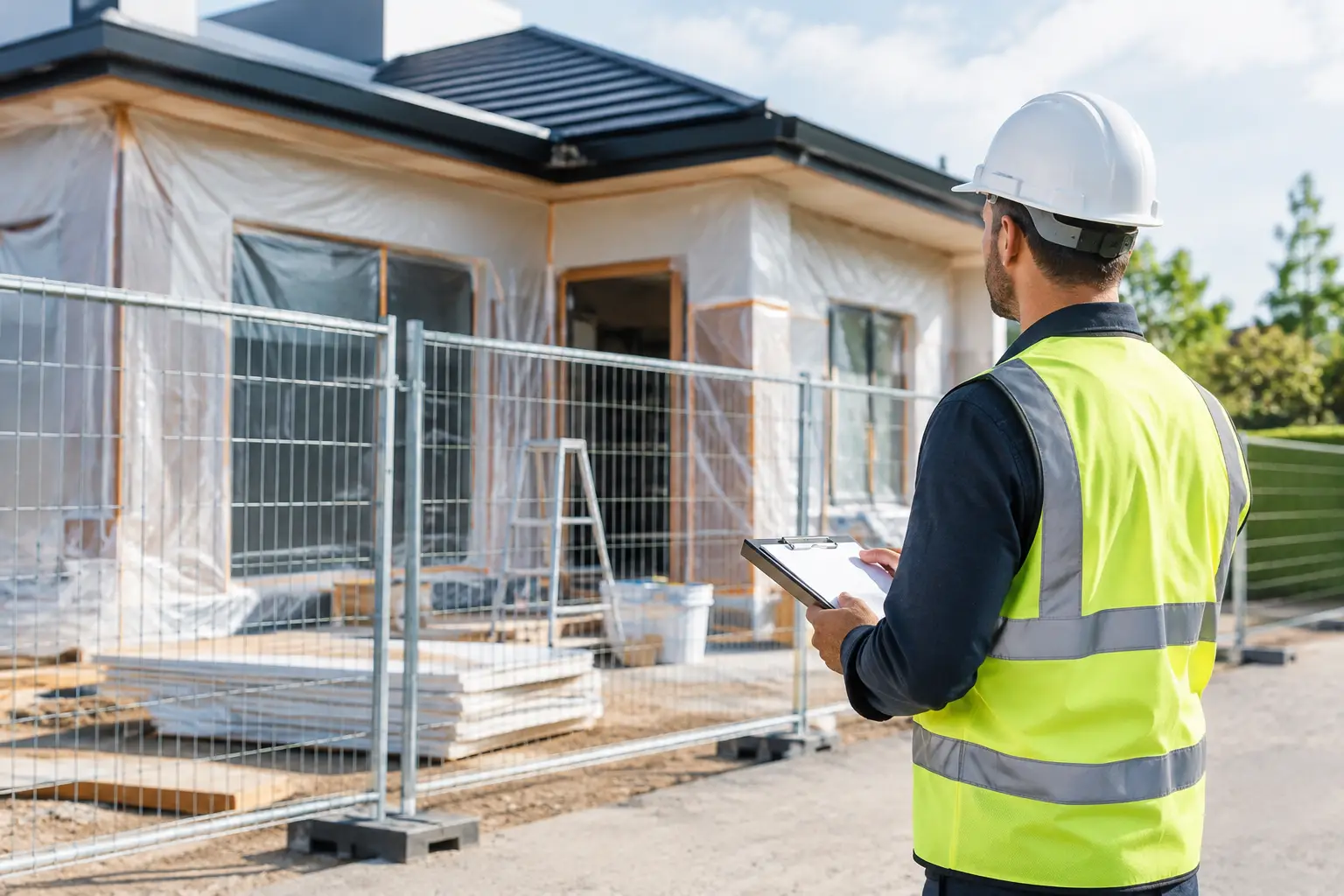
A detailed site inspection gives everyone a better result. Before work begins, the client and contractor should be clear about the areas being removed, the items being retained, access arrangements, building rules and the condition required for handover. Photos, marked-up plans and a walk-through of the tenancy are useful where the scope is complex.
It is also worth confirming what sits beneath the finishes. If tile removal is expected to expose a concrete slab, does the new flooring contractor require full adhesive removal and grinding? If partitions are coming out, are there damaged sections of floor or ceiling to be repaired later? If joinery is being removed, have services been disconnected? These details are where avoidable delays usually begin.
The finished site should not feel like an abandoned demolition job. It should be cleared of agreed materials, swept or vacuumed as appropriate, accessible for following trades and prepared to the standard the next stage requires. That handover is the real measure of a successful strip-out.
A commercial renovation moves fastest when removal is treated as a specialist stage, not a rough first pass. Get the old materials out cleanly, prepare the surfaces properly and give the next crew a site they can start on immediately.