
A painted concrete floor can look like a simple surface to strip, right up until the coating starts peeling in patches, grinding dust moves through the property, or the slab is left scarred and uneven. To remove painted concrete properly, you need to identify the coating, assess the slab underneath and use a method that clears the surface without creating more repair work for the next trade.
For homeowners, renovators and commercial property managers, the goal is not just getting rid of old paint. It is leaving clean, sound concrete that is ready for new flooring, a coating system, tiling, repairs or another finish.
Start by identifying what is on the concrete
Not all painted concrete behaves the same way. A thin acrylic floor paint may soften with a suitable stripper or come away readily with mechanical abrasion. A hard-wearing epoxy, polyurethane or industrial coating can be far more stubborn, particularly in garages, workshops, commercial kitchens and high-traffic entry areas.
The age and condition of the coating matter as well. Paint that is already lifting may seem easy to remove, but loose sections often hide adhesive residues, moisture issues, old patching compounds or weak concrete below. A coating that still looks intact may be poorly bonded in isolated areas, which can become obvious only once surface preparation begins.
Before choosing a removal method, check whether the concrete has cracks, spalling, repairs, oil staining or moisture coming through it. Removing the paint will not fix those underlying problems. It will simply expose them, which is better done early than after a new floor has been installed.
Treat older coatings with caution
If the building is older and the paint history is unknown, avoid dry sanding or aggressive grinding until the coating has been assessed. Some older paints can contain hazardous materials, including lead. Disturbing suspect coatings without the right controls can create a health risk and spread contaminated dust through the site.
A professional assessment is the sensible option where the coating is unknown, the area is occupied, or the work is inside a home, business or strata property. The right preparation starts with knowing what needs to be removed.
Choose the right method to remove painted concrete
There is no single best way to strip every painted concrete floor. The right approach depends on the coating thickness, the size of the area, access, the condition of the slab and what will be installed next.
Mechanical grinding and surface preparation
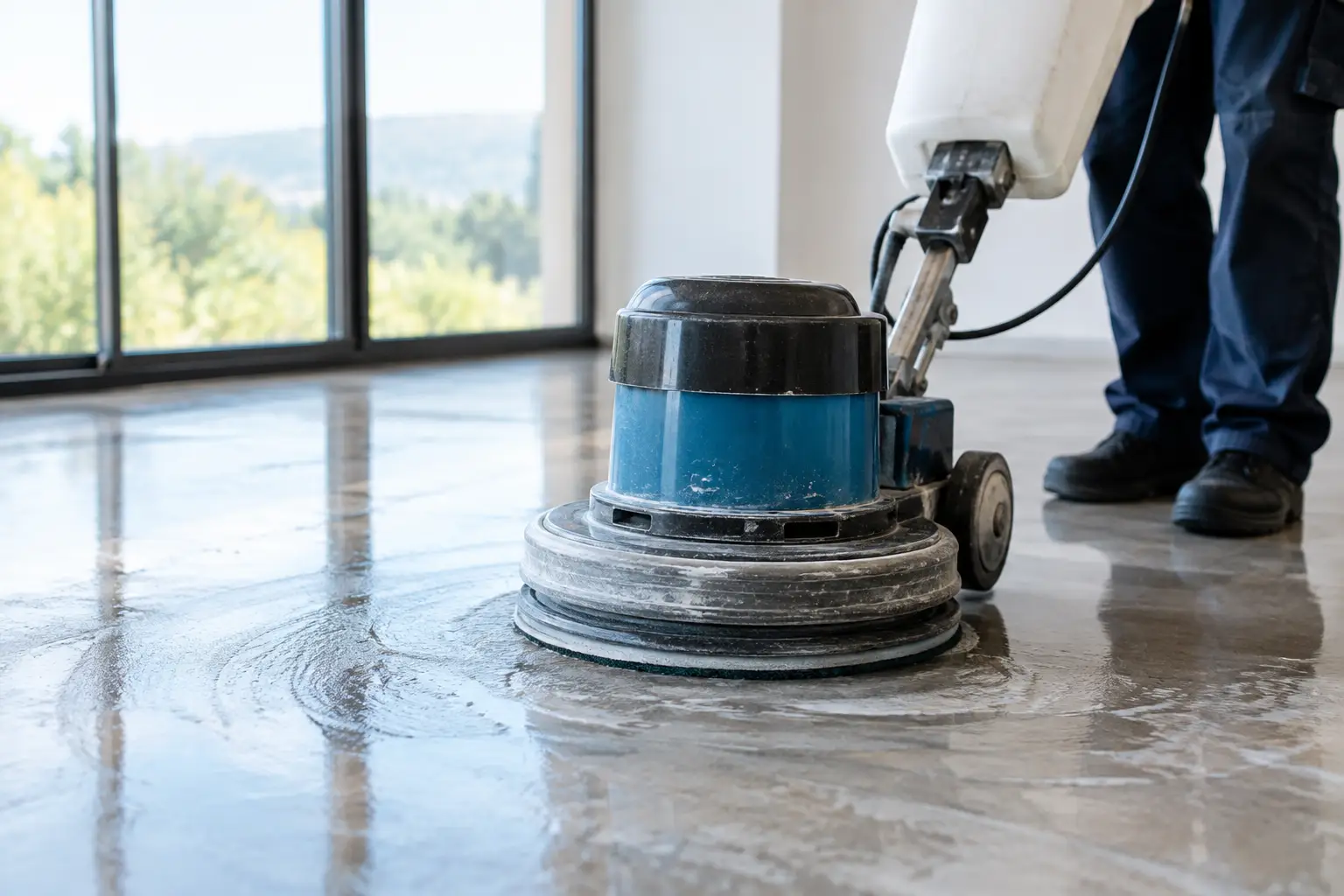
For many painted concrete floors, mechanical grinding is the most controlled and reliable method. Professional floor grinders fitted with the right diamond tooling can remove paint, epoxy and surface contamination while also opening the concrete profile for the next finish.
This is often the preferred approach when new epoxy, vinyl, tiles, timber flooring or a levelling compound is planned. Those systems need a clean, properly prepared substrate. Paint residue, glossy patches and weak surface layers can compromise adhesion and cause a new finish to fail early.
Grinding does remove a fine layer of concrete along with the coating, so it must be done with control. The aim is to achieve an even surface, not to gouge the slab or chase every small stain so aggressively that the floor becomes uneven. Experienced operators adjust tooling and passes to suit the coating and concrete hardness.
Chemical paint stripping
Chemical strippers can be useful for small, detailed or difficult-to-access areas, including edges, stairs and sections where machinery cannot reach. They work by softening the coating so it can be scraped away.
The trade-off is time, mess and clean-up. Stripper residue must be thoroughly removed before new flooring, adhesive or paint is applied. If residue remains, it can interfere with bonding just as badly as the old coating. Chemicals also require careful handling, ventilation and containment, particularly indoors or around occupied properties.
Chemical stripping is rarely the fastest answer for a large floor. It is usually a supporting method rather than the whole solution.
Shot blasting and other abrasive methods
Shot blasting can remove coatings quickly across large commercial slabs. It propels steel shot at the floor and recovers much of the material through a connected machine, leaving a textured concrete profile. It is effective for certain industrial coatings and broad open areas.
However, it is not suitable for every location. Edges still require separate work, access can be limited, and the resulting profile may be too aggressive for some finishes. On smaller residential jobs, a grinder with proper dust extraction is often more practical and precise.
Scraping and hand-held removal
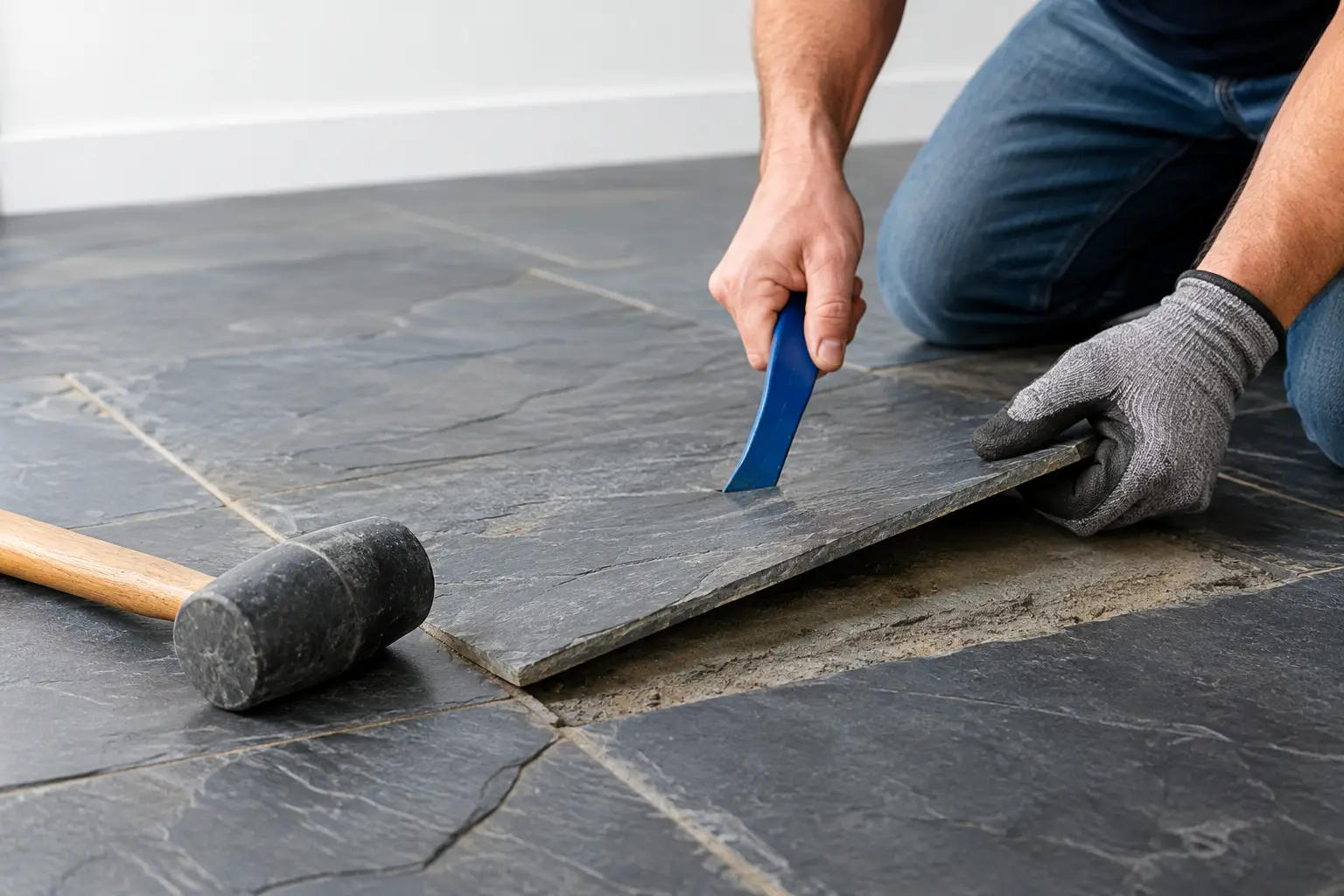
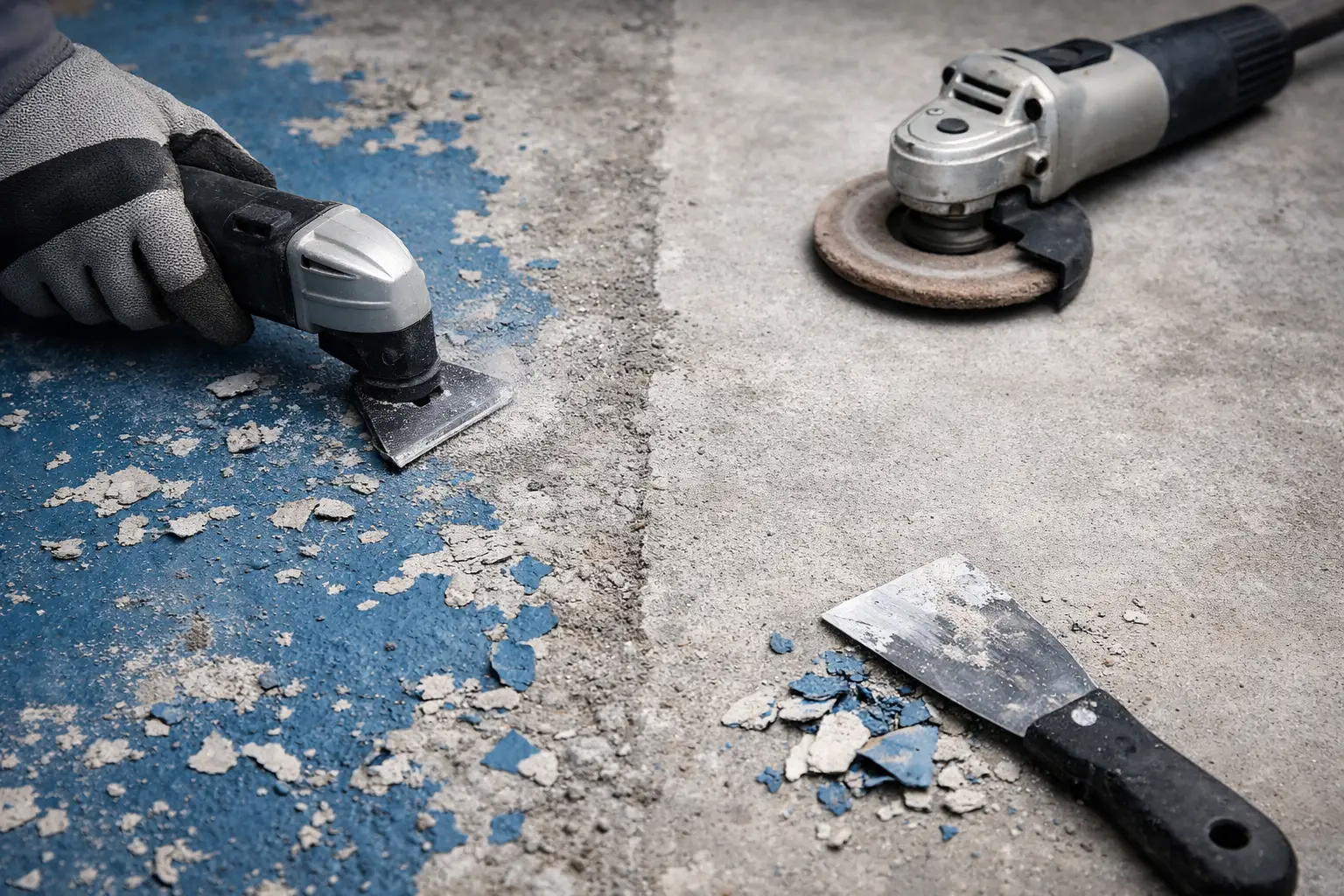
A scraper, chisel or hand-held tool can lift loose paint, but it is not a complete preparation method for most floors. It can be useful for testing adhesion or clearing small flaking sections before grinding. It will not reliably remove bonded paint or leave a consistent substrate ready for installation.
If a floor covering contractor says the slab must be paint-free, assume visible scraping alone will not meet that requirement. The surface needs to be clean at the level required by the product going over it.
Dust control is part of doing the job properly
Grinding painted concrete without effective dust extraction is a shortcut that creates problems. Fine dust travels well beyond the work area, settles in adjoining rooms and can delay other trades. In occupied homes, offices, retail spaces and hospitality venues, poor dust control turns a necessary job into unnecessary disruption.
Professional dust-control systems connect high-capacity vacuums to grinders and hand tools, capturing dust at the source. The work zone may also need containment, floor protection and a planned path for moving equipment and removing rubbish. These measures protect the property and make final cleaning far more effective.
Dust control is especially important where other renovation work is already complete, where the building remains occupied or where nearby surfaces cannot be easily cleaned. A clean removal process helps keep the whole project moving.
What can go wrong when paint is removed badly
The most common mistake is treating paint removal as purely cosmetic. If the old coating is removed unevenly, the slab can be left with high spots, scratches, soft patches and contaminant-filled pores. A new floor may look fine at first but fail because it was installed over an unprepared surface.
Moisture is another issue. Paint can conceal moisture pressure in concrete, particularly in ground-level slabs, garages and areas exposed to weather. Once the coating is gone, signs such as dark patches, efflorescence or recurring dampness may appear. That is useful information, but it needs to be addressed before applying another impervious coating.
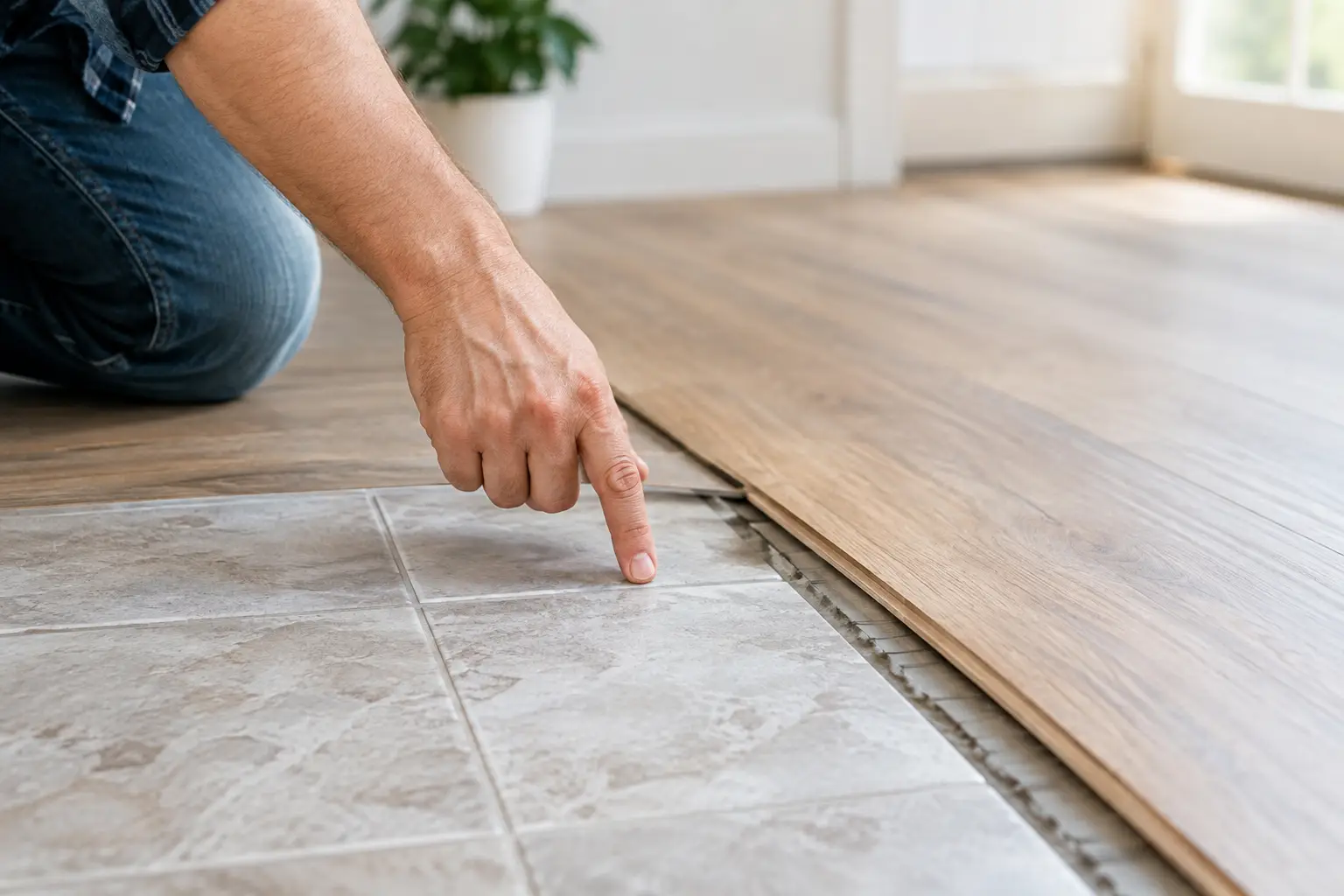
Adhesive contamination can also be missed. Some floors have layers of paint, glue, levelling products and old backing material from previous renovations. Each layer may respond differently to grinding or stripping. Removing only the visible paint may not be enough to create a stable base.
Preparing the slab for what comes next
The finish planned for the floor should guide the removal process. Concrete intended to remain exposed needs a more refined result than concrete that will be covered with carpet tiles. A slab for new epoxy requires a suitable mechanical profile and thorough cleaning. Tiling may require paint and contaminants removed, followed by repairs or levelling to achieve a sound bed.
After the paint is removed, inspect the floor in good light. Look for cracks, holes, hollow repairs, adhesive patches and changes in level. This is the point to deal with defects, not after the next material is installed.
For renovation projects with tight timelines, coordinating the removal work with the next trade is critical. The floor should be fully stripped, cleaned and ready before adhesives, waterproofing, levelling compounds or new coverings arrive on site. Rushing this handover is where delays and preventable rework begin.
When professional removal is the better call
A small patch of loose paint on an outdoor path may be manageable with basic preparation and the right safety gear. Large painted floors, hard epoxy coatings, internal areas, commercial spaces and slabs with unknown layers are a different job altogether.
Professional floor removal is worth considering when speed, dust control and substrate condition matter. The right equipment can remove stubborn coatings efficiently, reach the required surface profile and leave the site ready for the next phase rather than leaving you with a half-stripped slab and days of clean-up.
Rapid Stripped handles demanding floor removal and surface preparation work across Northern NSW, the Gold Coast, Brisbane and the Sunshine Coast, with a focus on clean execution and a properly prepared result.
A painted floor should never hold up a renovation. Remove the coating with the end finish in mind, protect the slab while the work is underway, and make sure the concrete handed to the next trade is genuinely ready to perform.