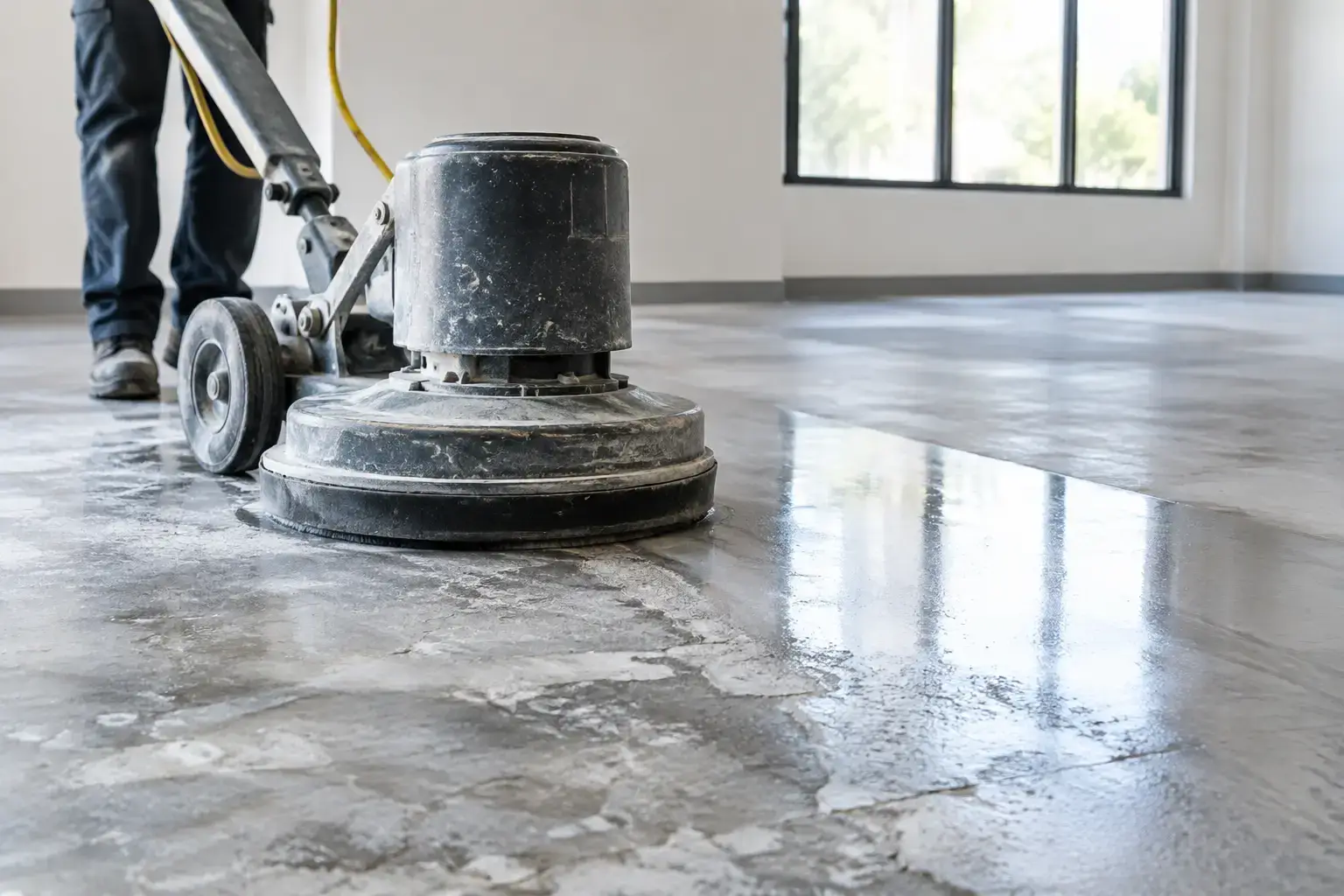
A tiled floor can look tough enough to survive anything, but the slab underneath is not indestructible. So, does floor stripping damage concrete? It can when the wrong tools, poor technique or rushed labour are involved. Done properly, professional floor stripping removes the old covering and adhesive while protecting the substrate and identifying any repairs needed before the new floor goes down.
The goal is not simply to get tiles, timber, vinyl or carpet out of the building. It is to leave a clean, stable and suitably prepared surface that keeps the next trade moving. That takes the right equipment, controlled removal methods and an understanding of what is sitting beneath the floor covering.
Does floor stripping damage concrete slabs?
Floor stripping does not automatically damage a concrete slab. In fact, controlled removal is often the best way to expose the slab, remove failed materials and prepare it for a new finish. The risk comes from aggressive methods that treat every floor the same.
Concrete can be chipped, gouged or broken away when operators use oversized breakers, hold demolition tools at the wrong angle, or force equipment through hard adhesive and tile bedding. Damage is more likely around doorways, slab edges, plumbing penetrations, floor wastes and areas where the concrete is already weak.
A slab can also look damaged when it has simply been uncovered. Old tiles and vinyl often hide existing cracks, uneven patches, old levelling compounds, paint overspray or previous repair work. Removal did not necessarily cause these issues – it revealed them. A proper assessment separates pre-existing defects from marks created during stripping.
For most renovation projects, minor surface scarring is manageable. It can be ground, patched or levelled as part of preparing for the next floor finish. Deep gouges, exposed reinforcement, loose concrete and significant cracking need closer attention before any new flooring is installed.
What causes damage during floor removal?
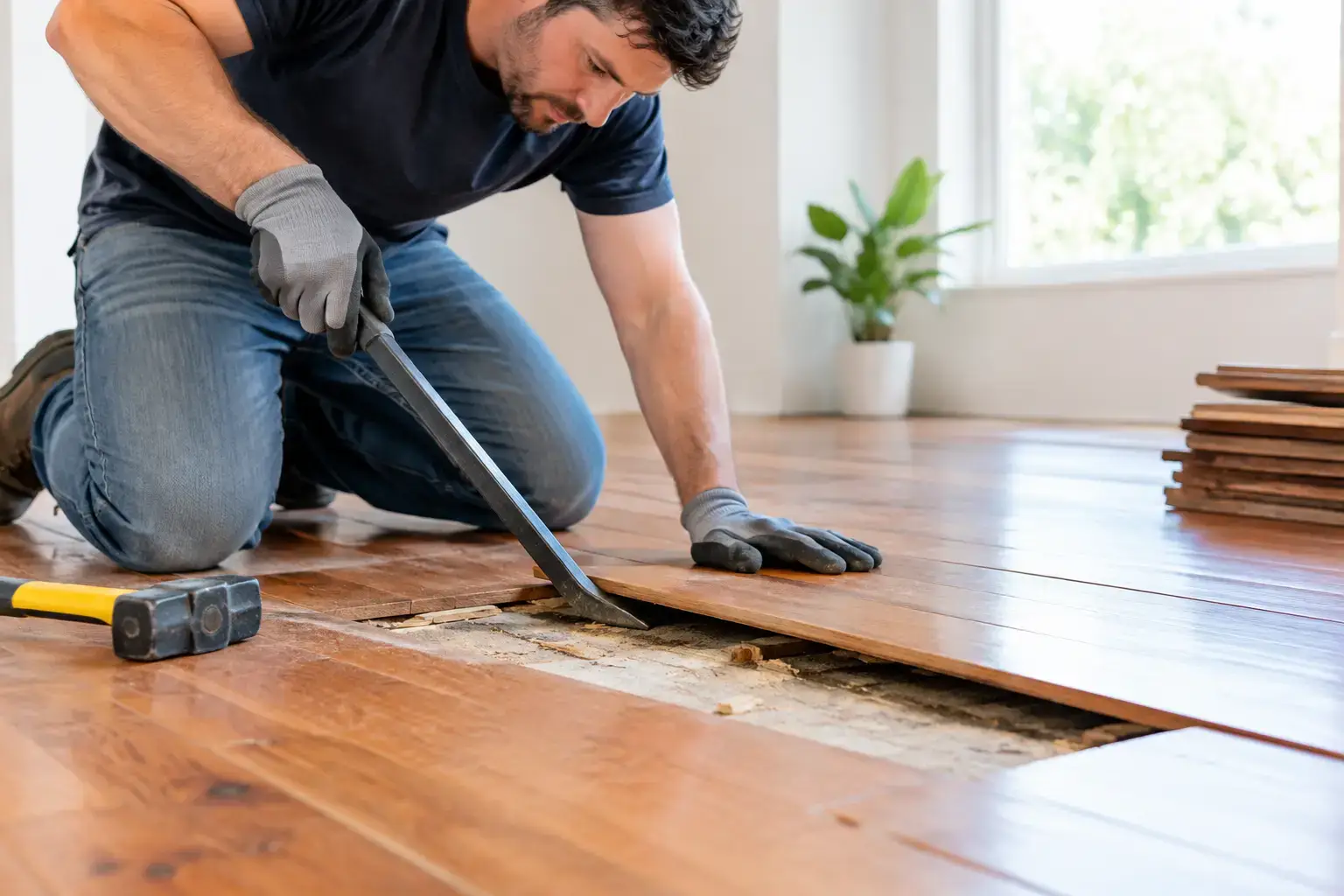
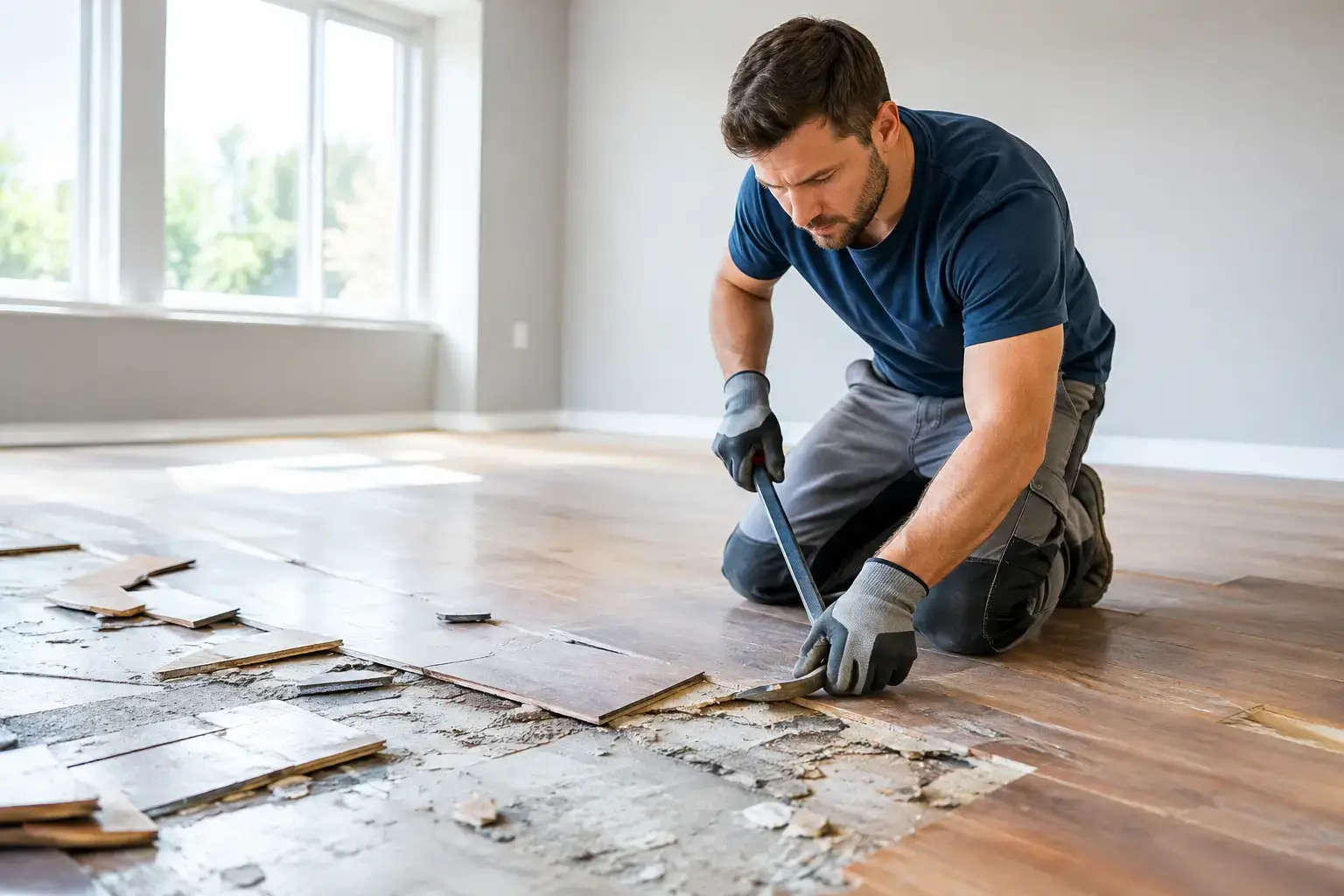
The material being removed makes a major difference. Ceramic and porcelain tiles are commonly set in hard adhesive or a thick mortar bed. Natural stone, terracotta and slate can be even more demanding, particularly in older properties where bedding methods were inconsistent. Timber may be nailed, glued or both. Sheet vinyl can leave stubborn adhesive across the entire slab.
The right approach changes with each of these materials. Tile removal usually requires a combination of carefully selected demolition tools and controlled chipping. Adhesive removal often calls for grinding equipment rather than more force. A contractor who uses a heavy breaker across every surface may remove the covering quickly, but can leave unnecessary divots and uneven areas behind.
Moisture, age and the condition of the slab also matter. Concrete that is soft, poorly finished, cracked or contaminated by old moisture problems will be more vulnerable than a sound, well-cured slab. In apartments and commercial buildings, there may be a screed, waterproofing system or topping layer rather than structural concrete directly below the finish. Removing that system without checking first can create a bigger repair job.
The difference between removal marks and real slab damage
Not every mark needs repair. Light scraper lines, shallow tool marks and adhesive shadowing are common after floor removal. They may not affect the next installation at all, depending on whether the new finish is carpet, hybrid flooring, tiles, polished concrete or an epoxy coating.
What matters is whether the surface is sound, flat and compatible with the new flooring system. New large-format tiles, vinyl planks and polished finishes show imperfections far more readily than carpet or a thick floor leveller. A small low spot that is irrelevant under one product can become a visible problem under another.
Real damage is generally more serious: broken sections of concrete, spalling where the surface has come away, large depressions, major cracks, or high and low areas that prevent proper installation. These issues should be dealt with before the flooring installer arrives. Covering them up often leads to hollow tiles, movement, cracked grout, failed adhesives or an uneven finished floor.
How professional stripping protects the substrate
Good floor stripping starts before the first tile is lifted. The site needs to be inspected for floor type, likely adhesive, access constraints and the planned replacement finish. This determines the tools, containment and preparation required.
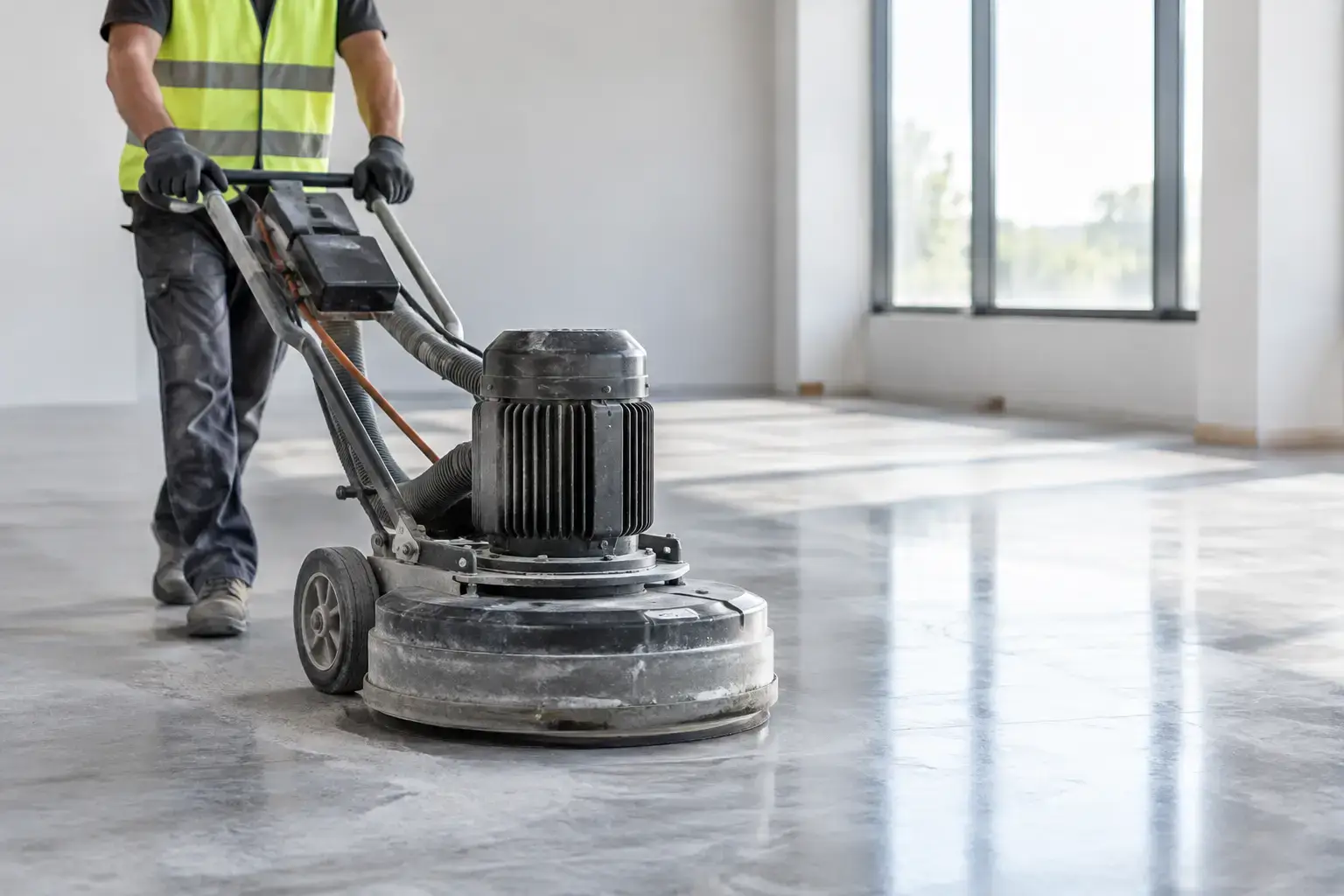
Experienced operators work progressively rather than blindly attacking the floor. They adjust tool angle and impact to the material, keep clear of vulnerable slab edges and work carefully around services. Where a hard adhesive remains after the covering is removed, diamond grinding is often a cleaner and more controlled answer than prolonged hammering.
Dust control is part of protecting the job as well. Concrete grinding creates fine silica dust, which must be managed with suitable extraction and work practices. Effective dust-control equipment keeps the site cleaner, improves visibility of the surface being prepared and reduces disruption to surrounding areas. It is particularly valuable in occupied homes, retail sites, offices and unit renovations where other trades or residents may be nearby.
The final pass matters just as much as removal itself. A site should be checked for remaining adhesive, loose material, trip hazards and areas that need patching or further grinding. This is where a removal job becomes genuine surface preparation.
When grinding is the right solution
Grinding is frequently misunderstood as a process that damages concrete. Used correctly, it removes only what needs to come off: adhesive residue, high spots, paint, failed coatings and light surface contamination. It can also smooth minor removal marks and create a better profile for new adhesives or coatings.
It is not the answer for every slab. Excessive grinding can reduce the surface unnecessarily, expose aggregate or leave a finish that does not suit the planned floor. The operator needs to know the required outcome. Preparing a slab for glue-down vinyl is different from preparing one for a new tile bed, epoxy coating or polished concrete finish.
There is also a practical trade-off. Taking extra time to grind and clean a slab properly can prevent delays later, but it is not always necessary to chase cosmetic marks that will be covered by a suitable underlay or levelling system. The right standard is the one required for the next stage of the renovation, not a one-size-fits-all finish.
Areas that need extra care
Some parts of a floor carry greater risk and deserve slower, more precise work. Bathrooms and laundries can contain waterproofing membranes beneath tiles. Removing tile and adhesive may affect that membrane, particularly where the room is being renovated back to the slab. A replacement waterproofing system should be planned before new finishes are installed.
Balconies, pool surrounds and external tiled areas may have drainage falls and waterproofing beneath the surface. Heavy removal can interfere with falls or damage layers that keep water out of the structure. Commercial kitchens, shops and medical spaces can also have specialised coatings, covings or substrate requirements that need to be assessed before stripping begins.
Older homes need another level of care. Previous renovations can leave multiple layers of flooring, unexpected patching compounds or adhesives of unknown composition. If there is any concern about hazardous materials, work should stop until the material is properly assessed. Fast removal should never mean taking shortcuts with site safety.
What to ask before your floor is stripped
Before engaging a floor removal team, be clear about what will be installed next. Tell them whether the plan is for tiles, timber, vinyl, carpet, epoxy or polished concrete. That information guides the preparation standard and helps avoid doing work twice.
Ask how adhesive residue will be handled, what dust-control measures will be used and whether the team will identify visible slab defects once the old flooring is removed. It is also worth confirming who is responsible for patching, levelling or waterproofing after strip-out. These are separate stages on many jobs, but they need to be coordinated.
For renovations across Northern NSW, the Gold Coast, Brisbane and the Sunshine Coast, Rapid Stripped focuses on controlled removal and practical surface preparation so sites are ready for the next trade. The aim is straightforward: remove the old floor efficiently, keep the mess contained and leave no hidden surprises where they can be avoided.
A stripped slab does not need to look perfect to be ready for renovation. It needs to be sound, clean and prepared for the flooring system that comes next. Get that part right, and the new floor starts on a surface built to last.