
The fastest way to blow out a renovation is to treat floor tile removal like a simple smash-and-strip job. On site, it rarely is. Some tiles pop cleanly. Others are bonded like they were meant to outlast the building. The difference comes down to the tile, the bedding, the adhesive, the slab condition, access, dust control and what needs to happen next.
If you are replacing flooring, renovating a kitchen or bathroom, preparing a commercial site, or stripping a property for resale, the real goal is not just getting tiles up. It is getting the floor ready for the next trade without damage, delays or a mess that spills into the rest of the job.
What floor tile removal actually involves
Good floor tile removal starts well before the first tile is lifted. The surface has to be assessed properly. Ceramic, porcelain, terracotta, slate and marble all come off differently. So do tiles laid over concrete compared with tiles fixed to screed or older mortar beds. In some jobs, the tile comes away but leaves hard-set bedding behind. In others, the bedding breaks with the tile and the slab underneath needs grinding or further preparation.
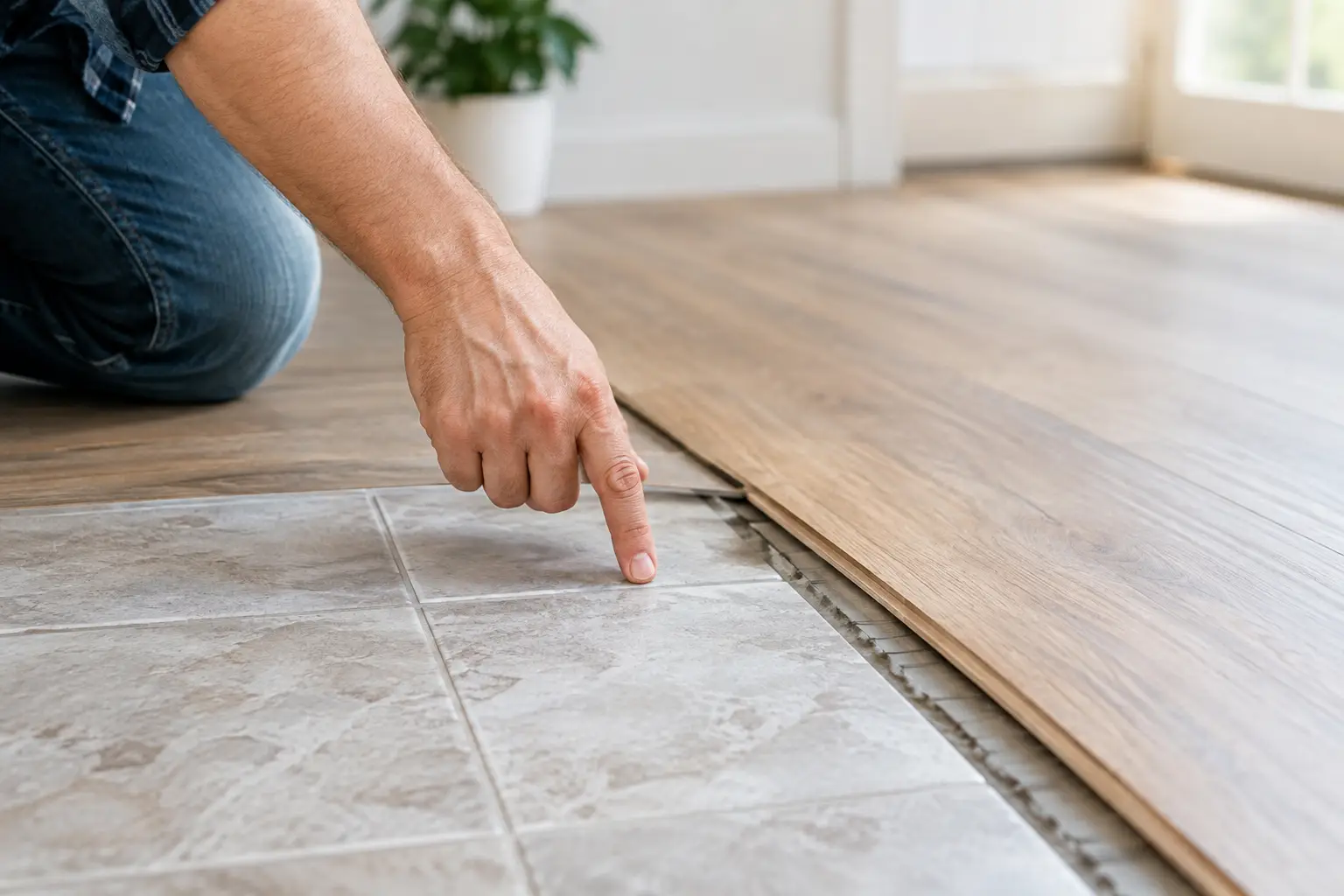
That is why experienced removal crews do not just focus on speed. They focus on method. If the floor is being prepared for new tiles, polished concrete, hybrid planks, vinyl or timber, the substrate matters as much as the removal itself. A rough, uneven or adhesive-covered slab can hold up the whole project.
The biggest mistake people make is assuming removal ends when the last broken tile is in the skip. It does not. The job ends when the area is stripped, cleaned down and ready for what comes next.
Why some tile jobs are easy and others are brutal
There is no one-size-fits-all answer with tile removal because installation methods vary wildly. Older homes and commercial premises often hide thick mortar beds, multiple flooring layers or previous patch repairs under the surface. Newer installations can be just as stubborn if high-bond adhesives were used and the slab was primed properly.
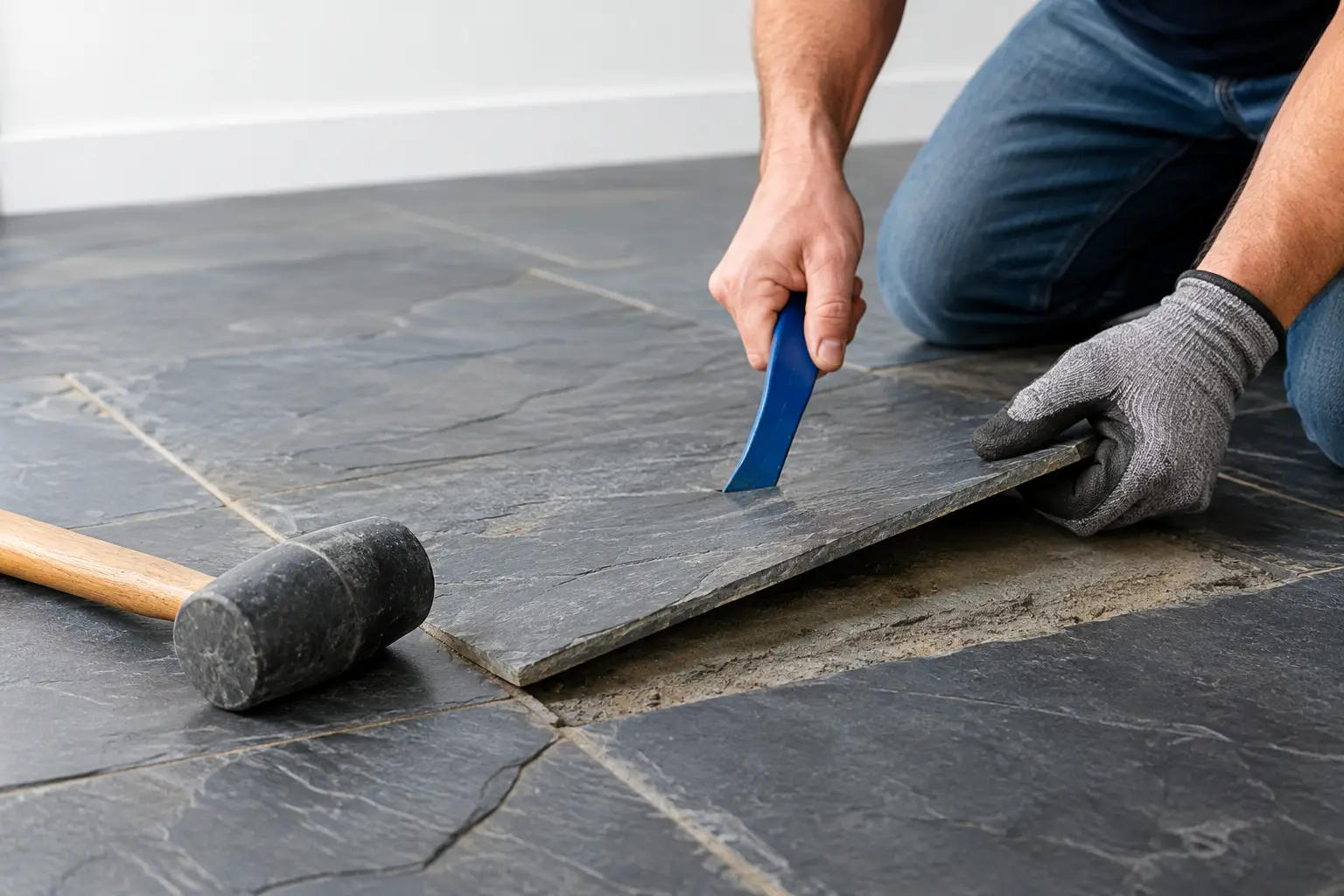
Porcelain is a common troublemaker. It is dense, hard and often installed to stay put. Natural stone can be equally difficult, especially when laid with heavy bedding. Small-format tiles can mean more grout lines and weaker break points, while larger tiles can come off in heavier sections that need more control. Then there is site access. A clear open area is one thing. A unit with lifts, narrow hallways and occupied rooms is another.
This is where trade experience matters. The right machine setup, the right blade or chisel angle, and the right sequence can save hours. More importantly, it can prevent unnecessary damage to the slab or surrounding finishes.
The biggest risks during floor tile removal
Dust is the obvious one, but it is not the only issue. Uncontrolled dust travels fast and gets into everything – cabinetry, air-conditioning systems, neighbouring rooms and shared commercial spaces. In occupied properties, that is a serious problem. In renovation environments, it creates extra cleaning and can interfere with other trades.
Substrate damage is another common issue. If the operator gets too aggressive or uses the wrong equipment, the slab can be gouged, cracked or left badly uneven. That may not sound like much during demolition, but it becomes a real headache when the new floor installer starts checking levels.
There is also the issue of hidden conditions. Once the tiles come up, you may find adhesive build-up, moisture damage, old levelling compounds, soft spots or previous repairs that were never visible from above. That does not mean the job has gone wrong. It means the removal has exposed what needed to be found before the next stage starts.
When DIY floor tile removal stops making sense
For a very small area, some property owners will try it themselves. That can work if expectations are realistic and the finish underneath does not matter much. But most people underestimate three things: the force required, the volume of debris, and how long it takes to get the floor truly ready.
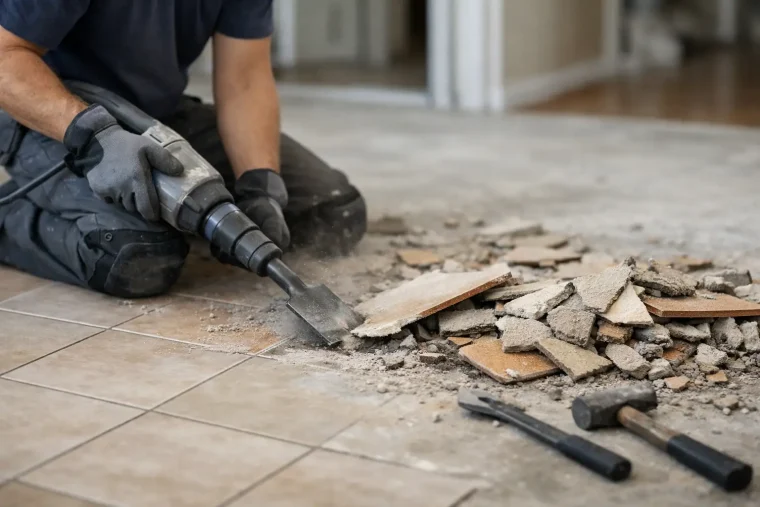
Pulling up a few loose tiles is one thing. Removing bonded floor tiles across a kitchen, living area, office or retail site is another. The labour is hard, the rubble adds up quickly, and hand tools alone usually leave behind bedding, adhesive and uneven spots. Then there is disposal, site protection and clean-up.
If there is a timeline to hit, other trades booked in, or tenants, staff or family still moving through the property, DIY can cost more in delays than it saves in effort. Floor removal is one of those jobs where specialist equipment and a disciplined process make a visible difference.
What a professional floor tile removal process should look like
The standard should be simple. Turn up prepared, protect what stays, remove what needs to go, control dust, manage waste and leave the site ready for the next trade.
That starts with identifying the floor system and choosing the right removal method. Mechanical tile lifters, demolition hammers, scrapers and grinders all have their place, but they need to be used properly. A professional crew works with the floor, not against it. They know when to break the tile, when to chase the bedding, and when the slab needs grinding rather than more impact.
Dust suppression and extraction should be part of the setup, not an afterthought. The same goes for edge protection, rubbish handling and safe movement through the site. In homes, that means respecting occupied areas and minimising disruption. In commercial spaces, it means planning around access, safety requirements and program deadlines.
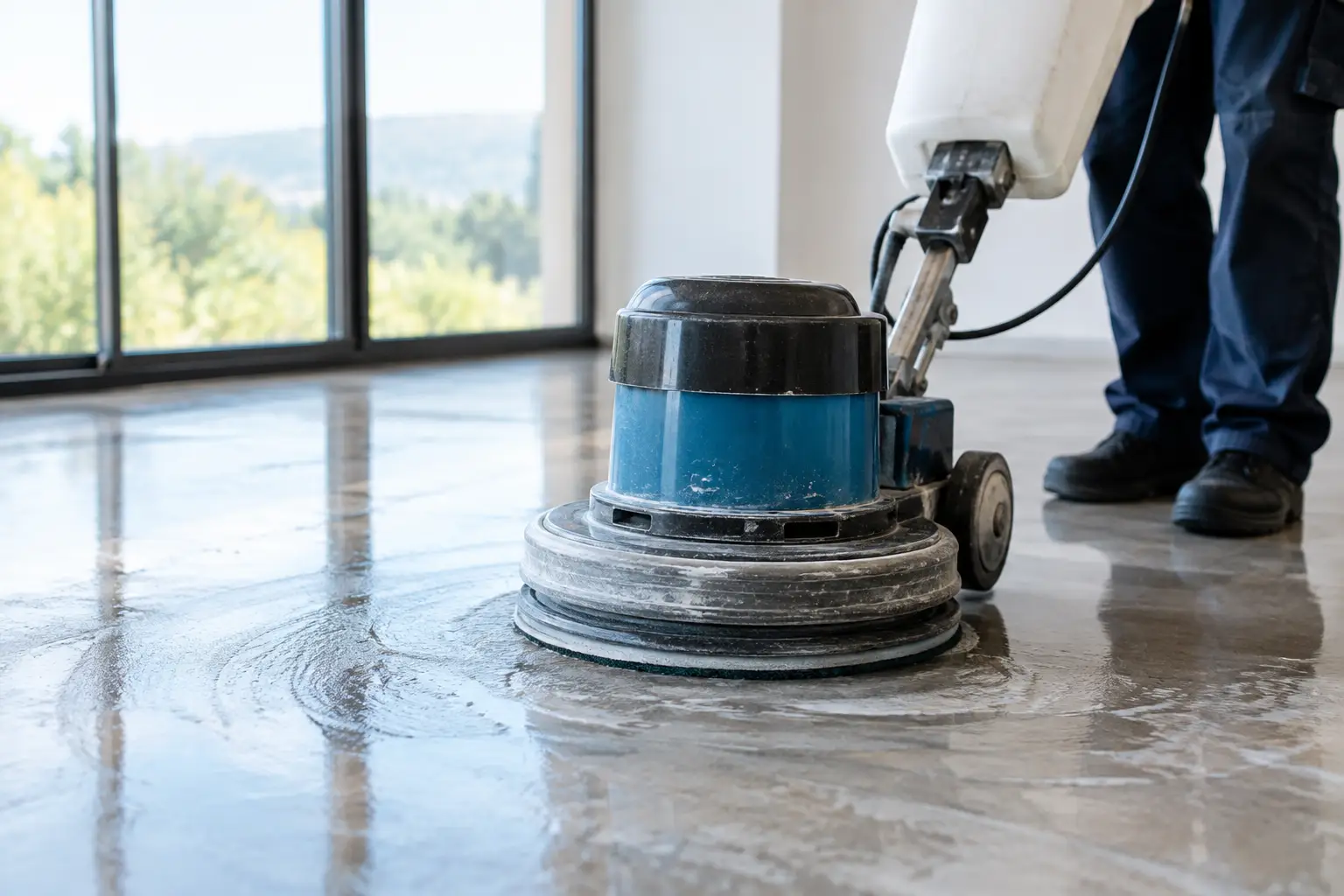
The final stage is often the most overlooked. Once the tiles are removed, the floor may still need adhesive removal, bedding reduction, grinding or surface prep. If that is not handled properly, the next installer inherits the problem.
Floor tile removal for homes vs commercial sites
Residential jobs are usually more sensitive to dust, noise and access through finished parts of the home. Kitchens, bathrooms, laundries and open-plan areas often sit close to cabinetry, painted walls or occupied rooms. The removal has to be controlled, not just fast.
Commercial work adds a different kind of pressure. Offices, hospitality venues, retail tenancies and body corporate properties often have tighter handover windows and less tolerance for downtime. There may also be after-hours requirements, lift bookings, loading constraints or shared access rules to manage.
The removal method should reflect the environment. A good operator understands that speed matters, but clean execution matters just as much. That is especially true when other trades are scheduled immediately after demolition.
What happens after the tiles are up
This is where many projects either stay on track or start drifting. Once the old tiles are gone, the substrate has to be assessed honestly. Is it level enough for retiling? Does it need grinding? Is there adhesive or mortar still bonded to the slab? Are there cracks, hollows or damaged sections that need attention before new finishes go down?
If the answer is yes, dealing with it immediately is the smart move. Waiting until the floor installer arrives only creates another stop-start point in the job. A stripped surface that is properly prepared gives the next trade a clean run and reduces the risk of installation issues later.
For renovators and builders, this is often the real value in using a specialist. The removal is not treated as an isolated demolition task. It is part of getting the site renovation-ready.
Choosing the right team for floor tile removal
The right contractor should be able to tell you what type of floor they are dealing with, what equipment the job calls for, what risks need managing and what the slab is likely to need afterwards. Clear answers matter. So does a track record in difficult removals, not just straightforward ones.
Look for a team that understands substrate preservation, not just demolition. Ask whether they handle adhesive removal and slab grinding if required. Check that they can work cleanly, safely and to a timeline that suits the broader renovation. If a business treats floor tile removal as brute-force labour, that is usually what you will get.
A specialist outfit approaches it differently. The job is to remove the old floor efficiently, manage the mess, and leave behind a surface that does not create problems for the next stage. That is the standard Rapid Stripped works to because a quick strip-out only counts if the site is actually ready when the work is done.
If you are planning floor replacement, think beyond getting rid of tiles. The better question is whether the area will be clean, safe and properly prepared when the dust settles. That is what keeps a renovation moving.