
A proper dustless floor removal equipment review starts with one hard truth: there is no machine that makes demolition completely dust-free. Tile bedding breaks down, adhesive turns to powder and concrete grinding releases fine silica. The difference is whether that dust is captured at the point of work, contained within the site and removed before it travels through the property.
For homeowners living through a renovation, commercial operators keeping part of a site open, and builders working to a tight handover, that difference matters. The right equipment reduces clean-up, protects adjoining rooms and helps deliver a slab that is actually ready for the next trade. The wrong setup creates airborne dust, damaged surfaces and delays that cost more than the removal work itself.
What dustless floor removal should mean
“Dustless” is often used loosely. On a well-managed job, it means using purpose-built extraction and containment to keep dust to a practical minimum while flooring, adhesives or coatings are removed. It does not mean a worker can grind a slab in an unsealed room with a domestic vacuum nearby and call the job clean.
A credible setup combines the removal machine, the right dust shroud or extraction port, a high-quality industrial vacuum and filtration suited to fine dust. It also needs an operator who adjusts the process to the material underfoot. A ceramic tile job and an old black adhesive job may both involve removal, but the tools and risks are not the same.
The real test is the result around the work zone. Are nearby rooms protected? Is fine dust being captured rather than pushed into the air? Is the concrete left clear enough for inspection, patching, levelling or new flooring? Equipment matters, but the system matters more.
Dustless floor removal equipment review: the essential gear
The best equipment is not necessarily the biggest machine on site. It is the combination that removes the covering efficiently without creating avoidable mess or damaging the substrate.
Heavy-duty floor scrapers
Powered floor scrapers are the workhorses for vinyl, carpet, cork, timber, glued-down flooring and many resilient coverings. A sharp blade at the correct angle can lift material in broad sections rather than turning it into small, dusty fragments.
For large open areas, a ride-on scraper can remove flooring quickly and consistently. It suits commercial sites, warehouses, offices and larger renovations where access allows it. Its trade-off is size. It may not fit through narrow doorways, around fixed joinery or into upstairs units.
Walk-behind scrapers are more flexible and often the better choice for houses, bathrooms, kitchens and constrained commercial spaces. They still have serious lifting power, but they give the operator better control around walls, thresholds and slab transitions. Neither type replaces the other. The right choice depends on access, floor area, material thickness and how firmly the covering is bonded.
Shrouded grinders and scarifiers
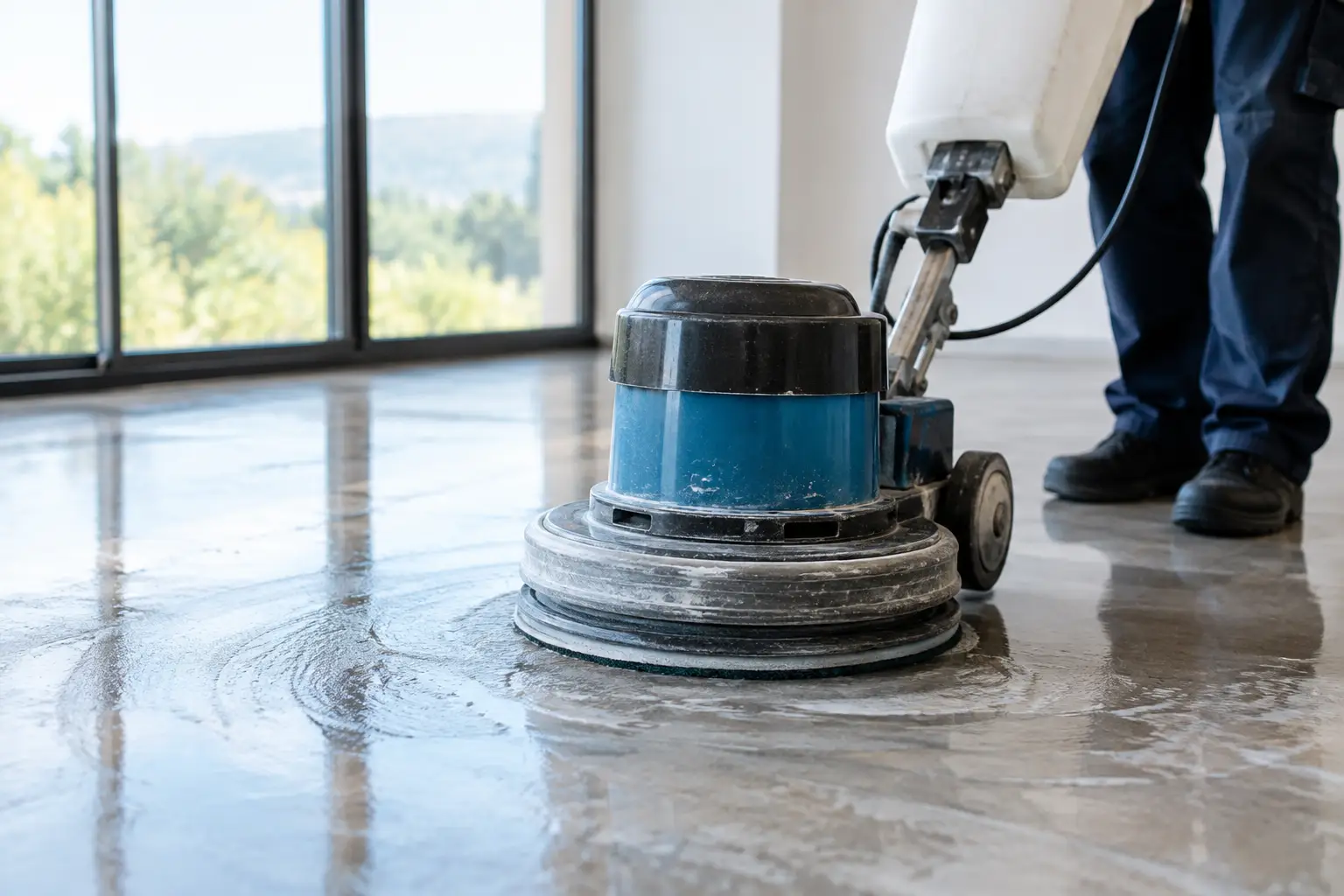
Once tiles, timber or vinyl are lifted, the slab frequently still carries adhesive, thinset, tile bedding, paint, epoxy or levelling compound. This is where shrouded grinders earn their place. Their diamond tooling removes residue while the shroud directs dust into an extraction hose.
For stubborn high spots or thick coatings, scarifiers and more aggressive grinding equipment may be required. These machines can make fast progress, but they must be selected carefully. Too much aggression can leave grooves, expose aggregate or remove more concrete than the next flooring system allows.
A good operator matches the tooling to the task. Softer adhesive may respond to a different diamond bond than hard tile glue or epoxy. The aim is not simply to make the slab look cleaner. It is to leave a sound, even surface that suits the planned installation.
Industrial HEPA vacuums and separators
The vacuum is not an accessory. It is a central part of dust control. A domestic shop vacuum is not designed for the sustained volume of fine dust produced during floor grinding. It can lose suction, clog quickly and release fine particles back into the room.
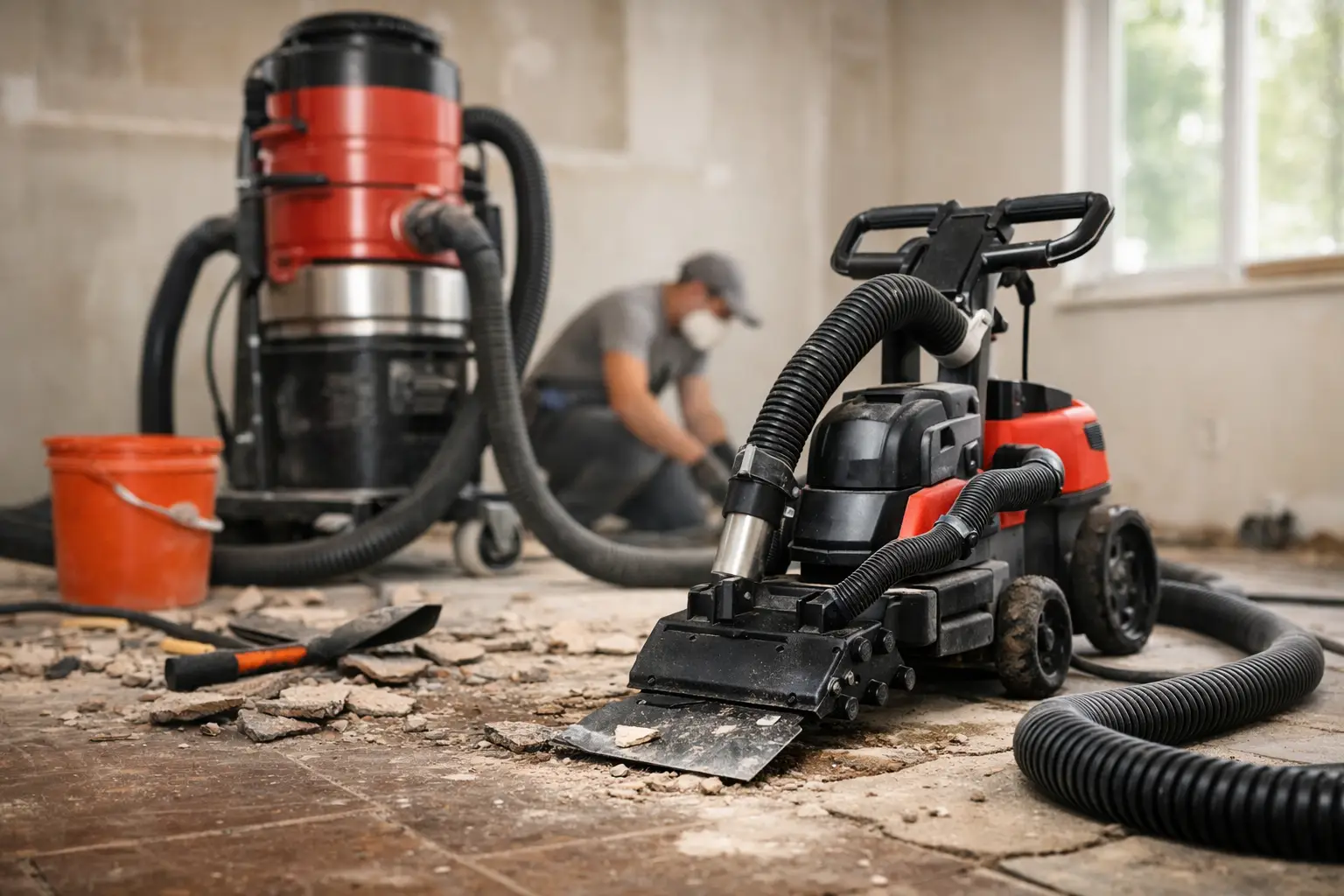
Industrial extractors with HEPA filtration are built for this work. When paired correctly with a grinder or scarifier, they maintain airflow and capture fine dust before it spreads. HEPA filtration is particularly relevant where silica-bearing concrete is being mechanically worked, because the finest particles are also the easiest to breathe in.
Pre-separators or cyclonic units improve performance on larger jobs. They collect heavier material before it reaches the main vacuum, which keeps filters cleaner and reduces interruptions. That may sound like a minor detail, but on a full-home strip-out or commercial removal, fewer stoppages mean steadier progress and a cleaner site throughout the day.
Containment and air management
Even the best extraction system cannot capture every particle, particularly at edges, transitions and when rubble is being handled. Physical containment closes that gap. Temporary plastic barriers, sealed doorways, floor protection and controlled access routes help stop dust migrating into occupied areas.
On sensitive projects, air scrubbers and negative-air equipment may also be appropriate. These systems filter airborne particles and help maintain controlled airflow in the work area. They are especially useful in offices, retail sites, apartments and renovations where other areas remain occupied.
Containment takes time to set up, but skipping it is a false economy. Fine dust finds gaps under doors, through air-conditioning returns and into rooms that were never part of the work scope. Proper preparation is generally faster than cleaning an entire property afterwards.
Where equipment performance is tested
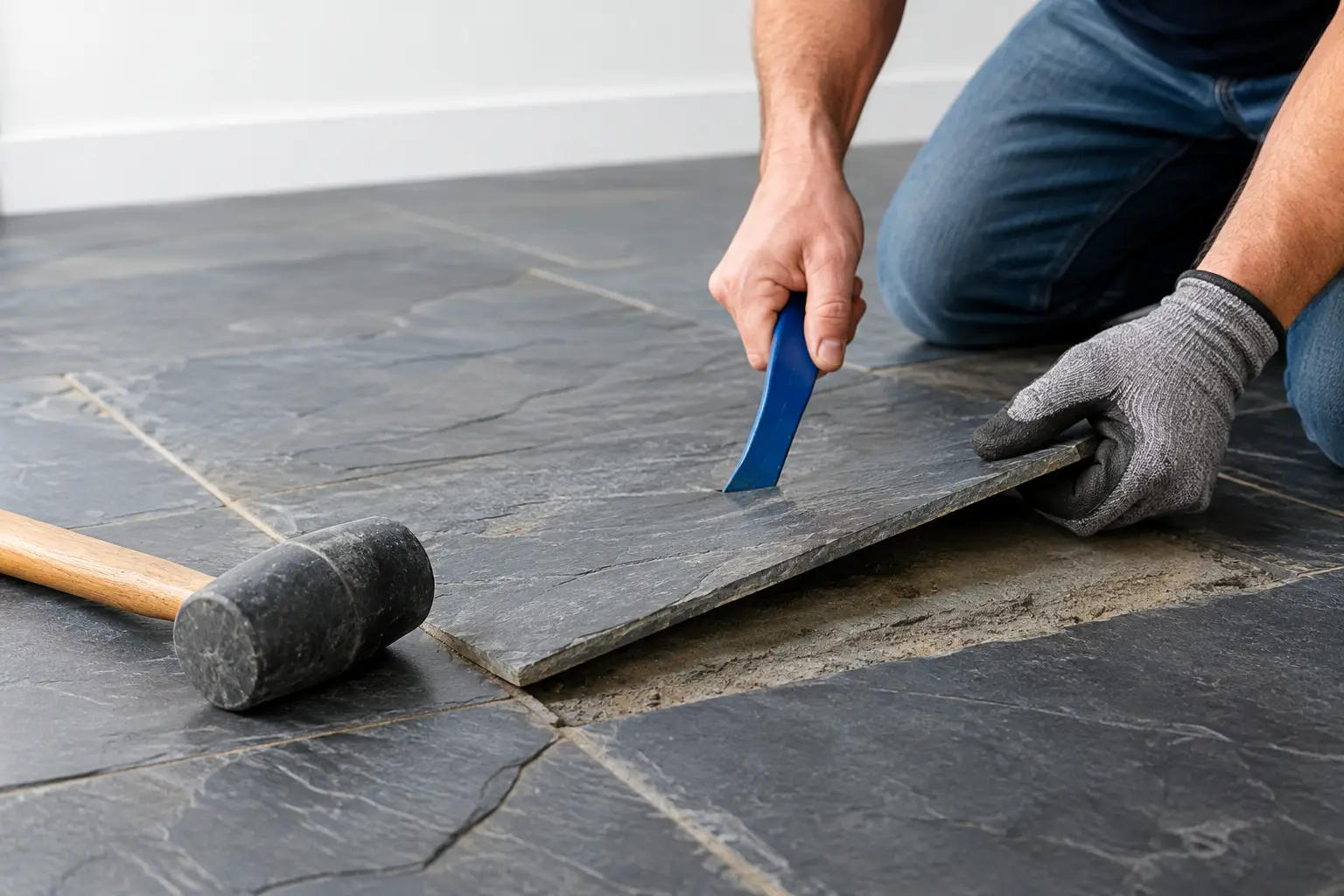
Tile removal is one of the toughest tests. Removing tiles is only the first stage. Thick bedding, hard adhesive and uneven patches often remain on the slab, requiring controlled grinding and reliable extraction. A crew that only focuses on lifting tiles can leave a surface that slows down the tiler, waterproofer or flooring installer.
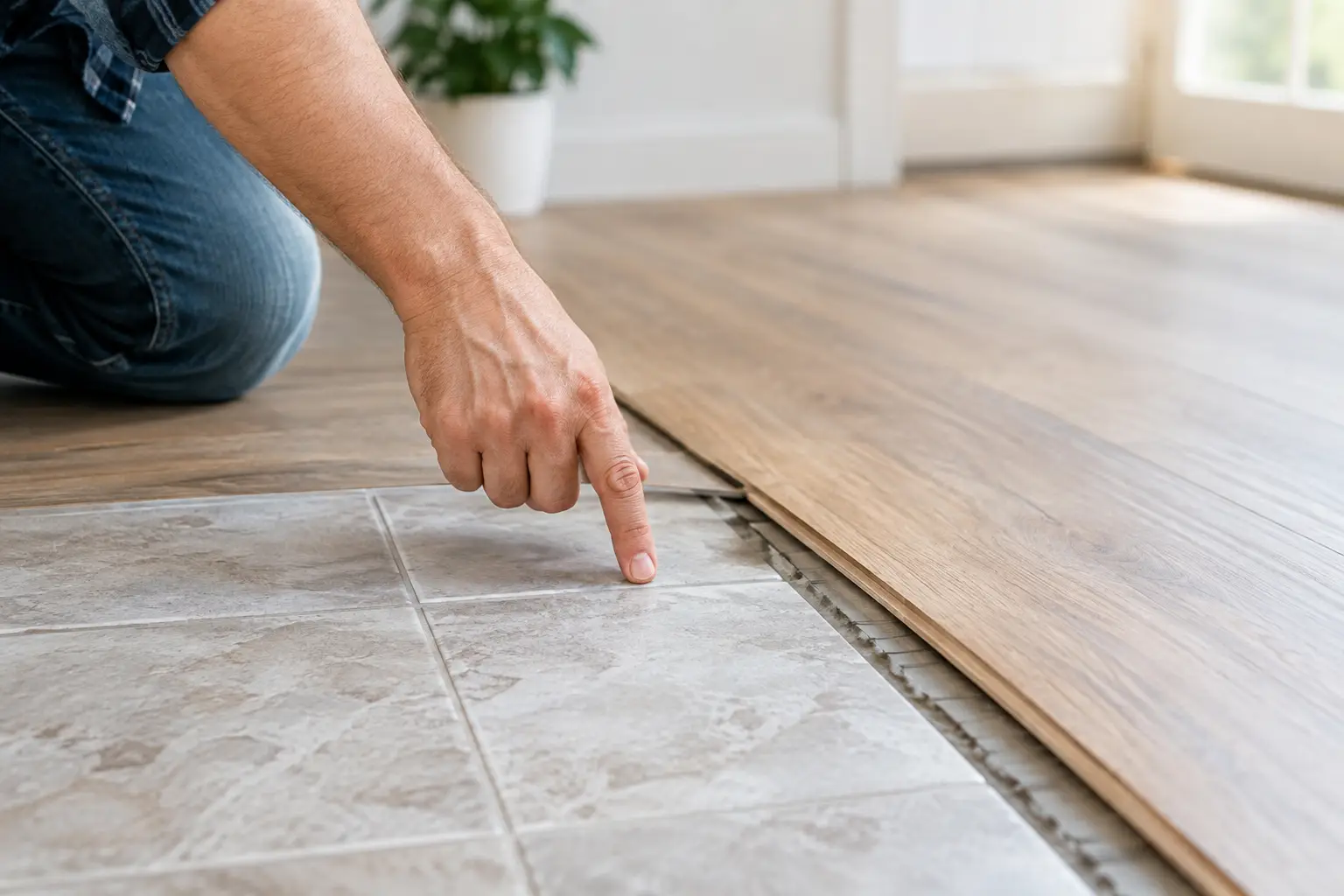
Timber and vinyl present a different challenge. The material may come up cleanly, while the adhesive does not. Some glues soften or smear under heat and friction. Others become brittle and stubborn. The equipment needs to remove the residue without contaminating the slab or leaving a glossy surface that compromises the next adhesive system.
Epoxy, paint and coatings require their own assessment. Mechanical removal may be necessary, but the extent of grinding should match the condition of the concrete and the specification for the replacement finish. A polished concrete outcome, for example, requires a different level of care from a slab that will be covered with carpet tiles.
Before any old resilient floor covering or adhesive is disturbed, its age and composition should also be considered. Suspect materials require appropriate assessment and a compliant process. Dust extraction is valuable, but it is not a substitute for identifying hazardous materials before work begins.
What separates a clean job from a messy one
Equipment quality is only one part of the review. Blade condition, vacuum filter maintenance, hose connections and operator technique all affect the result. A worn scraper blade makes a simple removal job harder. A blocked filter drops extraction performance. A poorly seated grinder shroud can create a visible dust trail in minutes.
Site preparation matters just as much. Furniture, appliances and loose fittings should be removed or protected. Doorways should be assessed, and the rubbish route planned before demolition begins. In occupied properties, the team also needs to consider pets, residents, access times and where trades can continue working without crossing the removal zone.
At Rapid Stripped, the target is practical: remove the old surface efficiently, control the mess and hand back a site ready for the next stage. That may mean a powerful scraper for bulk removal, followed by shrouded grinding for adhesive and final slab preparation. It may also mean choosing a smaller machine because the job is upstairs, access is tight or protecting an occupied area is the priority.
Choosing the right approach for your project
If you are comparing floor removal providers, ask what equipment will be used after the flooring comes up. That answer tells you far more than a general promise to remove tiles or pull up carpet. Ask how dust will be captured, whether adjoining areas will be contained and what condition the slab will be left in.
Also be clear about the next trade. A slab for waterproofing, hybrid flooring, polished concrete, carpet or new tiles may need a different finish. The removal contractor should understand that requirement before work starts, not after the old floor has been stripped.
The best dust-control setup is the one matched to your material, site access and finish requirements. When the equipment and process are selected properly, the old floor disappears without turning the rest of the property into a clean-up project, and the renovation can move forward without unnecessary delay.