
A Gold Coast retail stripout example is rarely as simple as pulling out a few counters and lifting old floor coverings. Retail sites are often inside active centres, surrounded by neighbouring tenants, restricted delivery access and strict handover dates. The job has to move quickly, stay controlled and leave the space genuinely ready for the next trade.
For a retailer, landlord, builder or commercial property manager, the result matters more than the demolition noise. You need old finishes, fixtures and adhesive removed properly, rubbish cleared, dust managed and the slab prepared for the incoming fit-out. A stripout that looks finished but leaves loose bedding, floor glue or damaged surfaces behind can delay every trade that follows.
Gold Coast retail stripout example: from old shop to fit-out ready
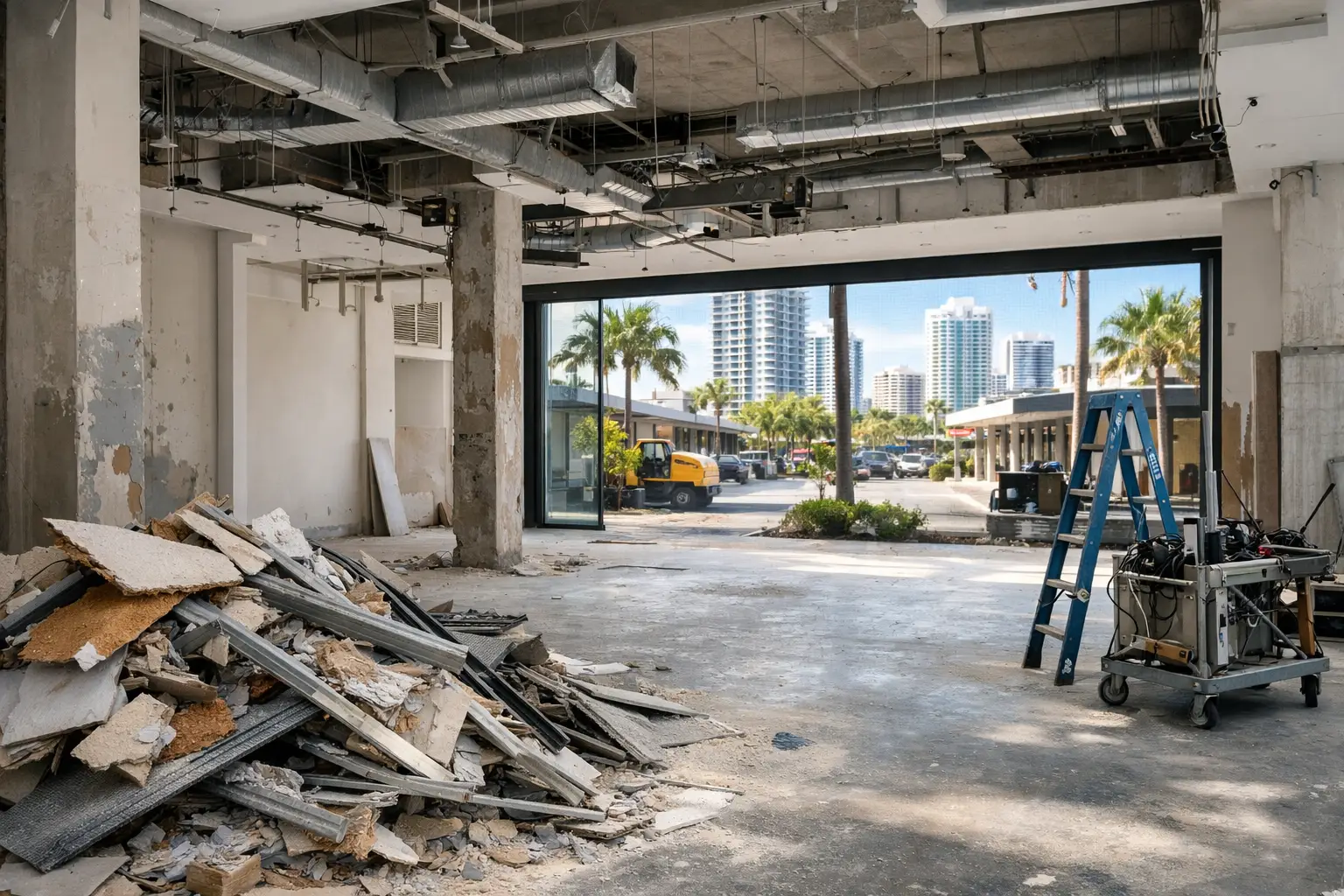
Consider a typical small retail tenancy being handed back after several years of trade. The shop has vinyl planks over a stubborn adhesive, tiled sections near the entry, built-in counters, shelving, old signage, partition walls and a compact storeroom. The next tenant has a new layout planned and their shopfitter is booked to start straight after handover.
The challenge is not just removing what is visible. The work must be sequenced so the tenancy remains safe, the building rules are followed and the final surface is ready for the new installation. In a busy Gold Coast centre, that can mean working within approved hours, using designated loading areas and keeping common areas clean throughout the job.
A proper stripout starts with a site inspection. This identifies the materials, checks how the floor covering has been installed, confirms access and locates services that need to be isolated by the appropriate trades. It also establishes what stays. Some projects require a full internal demolition; others need only floor removal, selected joinery removal and surface preparation.
That distinction is worth getting right before work begins. Removing more than required creates avoidable reinstatement work. Removing too little leaves the incoming contractor with an unclear or unusable site.
Start with a clear scope and site plan
On a commercial stripout, assumptions are where time gets lost. A clear scope should confirm whether the team is removing flooring only, or also counters, cabinetry, partitions, ceiling elements, wall linings, display fixtures and rear-of-house finishes. It should also identify rubbish removal, loading access, building management requirements and the required handover condition.
For the retail example, the work may be staged around the tenancy’s main constraints. Loose stock and portable items are removed first. Services are dealt with safely by qualified trades where required. Fixed joinery and non-structural internal elements can then be removed in a controlled order, creating room for floor equipment and making the final clean easier.
This planning is especially important where there are shared walls, glazed shopfronts or finished common-area flooring nearby. A fast job is not one where people rush. It is one where the right equipment, labour and waste plan are on site from the start.
Floor removal is usually the critical path
Old retail floors can be tougher than they look. Vinyl, carpet tiles, ceramic tiles, timber, epoxy coatings and glued finishes all behave differently once removal starts. A floor that has had several refurbishments may have layers of adhesive, levelling compound, tile bedding and patch repairs sitting over the concrete slab.
In this example, lifting the vinyl planks is only the first part. The adhesive underneath may be thick, brittle or spread unevenly across the tenancy. If it is left behind, new flooring may not bond correctly. If it is removed with the wrong method, the slab can be gouged or left with high and low spots that need further correction.
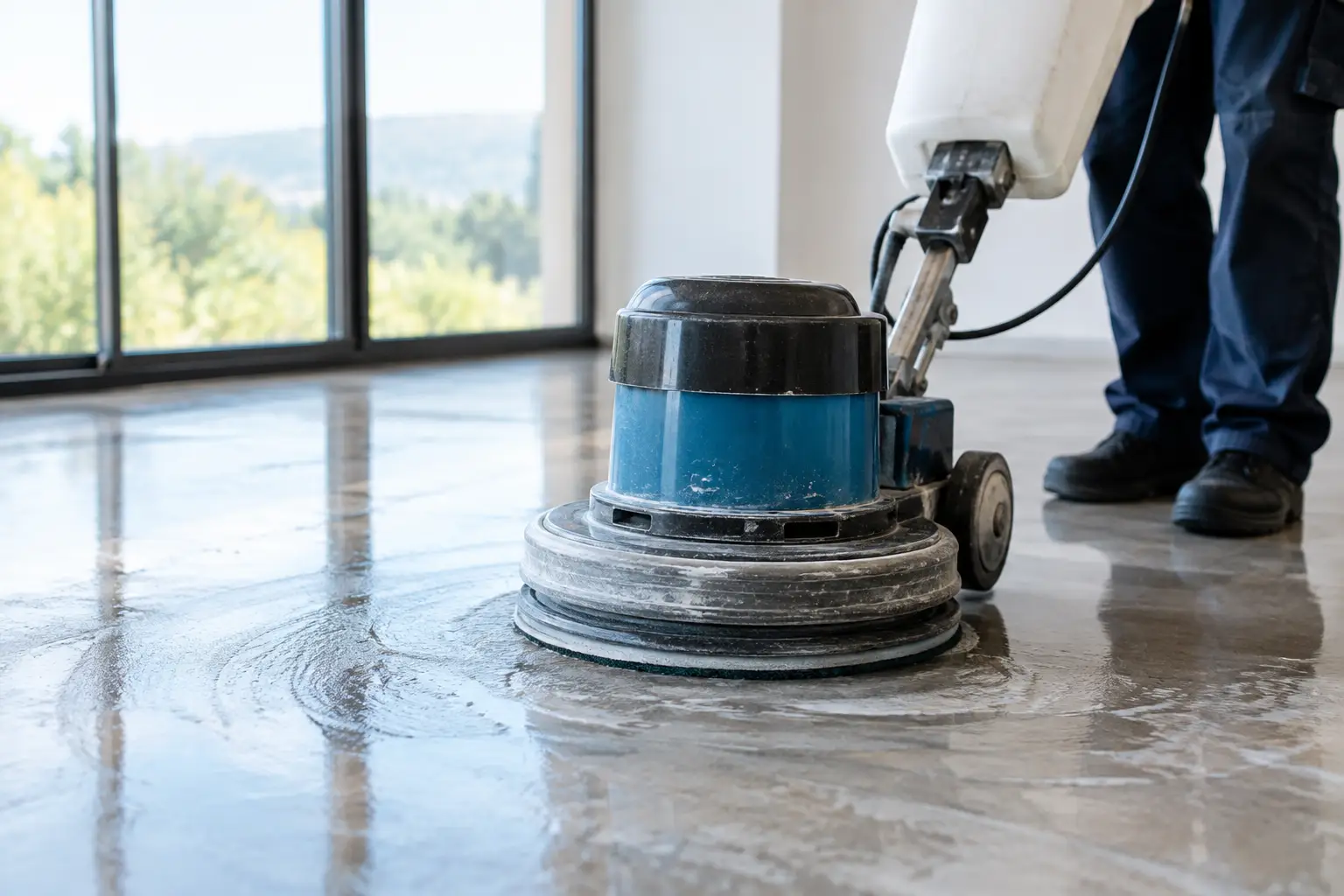
Specialist floor stripping equipment and slab grinding are used to remove the remaining material while maintaining control over the finished surface. The exact method depends on the coating, adhesive strength, slab condition and the new floor specified for the site. Some floors need a clean, sound substrate only. Others need a more defined surface profile for new adhesives, levelling products or coatings.
The goal is not to make the slab look perfect for its own sake. The goal is to provide a clean, stable base that gives the next trade a proper starting point.
Dust control protects the site and schedule
Dust is one of the biggest risks in retail demolition and surface preparation. Grinding concrete or removing hard tile bedding without effective extraction can send fine dust into shopfront tracks, air-conditioning areas and adjoining spaces. It creates more cleaning, more complaints and more risk of a delayed handover.
A controlled approach uses suitable dust extraction at the source, regular clean-up and sensible containment around the work area. In a shopping centre or mixed-use building, this makes a practical difference. Centre management wants common areas protected, neighbouring businesses want minimal disruption and the next contractor needs to walk into a site that is clean enough to start work.
There is a trade-off here. Dust-control measures and careful waste handling take planning, but they prevent the far larger cost of cleaning up a poorly managed stripout. For short tenancy turnarounds, that discipline is what keeps the program moving.
What a fit-out ready handover should look like
By the end of this Gold Coast retail stripout example, the outgoing fitout is gone, rubbish has been removed and the work area has been cleaned down. More importantly, the incoming builder or shopfitter can see what they are working with.
A fit-out ready handover commonly means floors are stripped to the agreed substrate condition, loose material and adhesive residue are removed, and surfaces have been prepared for the next specified finish. It can also mean walls, joinery and selected internal elements are removed in line with the approved scope. The exact definition should always be agreed before the job starts, particularly if there are existing defects, concealed layers or items the landlord requires to remain.
This is where experience matters. A retail stripout should not leave hidden problems for the next crew to discover on day one. If damaged concrete, uneven patches or unexpected layers are found, they should be identified early so the builder can make a decision before installation work is underway.
Why speed matters, but not at the expense of finish
Retail tenancies do not earn while they are empty. Every unnecessary day between outgoing tenant, make-good, fit-out and reopening places pressure on the project. That is why many stripout projects are planned for rapid completion, with the right crew and machinery matched to the size and material load of the site.
Still, same-day completion is not the right promise for every tenancy. A compact shop with straightforward finishes may be completed quickly. A larger site with multiple floor layers, difficult adhesives, restricted access or complex demolition requirements can need more time. The reliable approach is to assess the work honestly, plan the sequence properly and complete it to the agreed condition rather than rushing an incomplete result.
For property managers, this also reduces handover disputes. For builders, it means fewer surprises before fit-out. For business owners, it provides a clearer path from an outdated tenancy to a new trading space.
Choosing a specialist for retail stripouts
Retail stripouts sit at the intersection of demolition, floor removal and surface preparation. A general labour crew may be able to remove loose fixtures, but difficult floor coverings, tile bedding, adhesives and slab preparation need specialist equipment and know-how.
Ask whether the contractor can handle the full removal scope, manage dust, remove rubbish and prepare the surface for what comes next. Confirm how they will work around access restrictions and whether they understand the site rules for commercial buildings. Most importantly, make sure the handover condition is written clearly, not left to interpretation.
Rapid Stripped approaches retail work with that practical focus: remove the old materials efficiently, control the mess and leave a clean site that is ready for the next stage. When the stripout is planned properly from the first inspection, the new fit-out has the clear, solid start it needs.