
Pulling up old timber flooring looks simple until the first board fights back, the adhesive stays put, and the slab underneath turns out to be far rougher than expected. That is why timber floor removal Sunshine Coast jobs need more than brute force. If the goal is a clean handover to the next trade, the removal has to be controlled, thorough and matched to the condition of the floor underneath.
For homeowners, builders and renovators, the real issue is not just getting rid of old boards. It is keeping the project moving. Delays usually happen when flooring is removed poorly, fixings are left behind, or the subfloor is damaged and needs extra repair before new finishes can go down. Good removal work saves time later.
What timber floor removal on the Sunshine Coast usually involves
Not all timber floors come up the same way. Some are solid timber fixed over joists. Others are direct stick engineered boards bonded to concrete with stubborn adhesive. You also see floating systems that lift quickly, alongside older installations with secret nails, patch repairs and sections that have already failed.
That is why the first step is always identifying the floor type and the base underneath it. A removal crew needs to know whether they are working over concrete, compressed sheeting, yellow tongue, old hardwood bearers or a mix of surfaces from previous renovations. On many Sunshine Coast properties, especially older homes and renovated units, one room can tell a different story from the next.
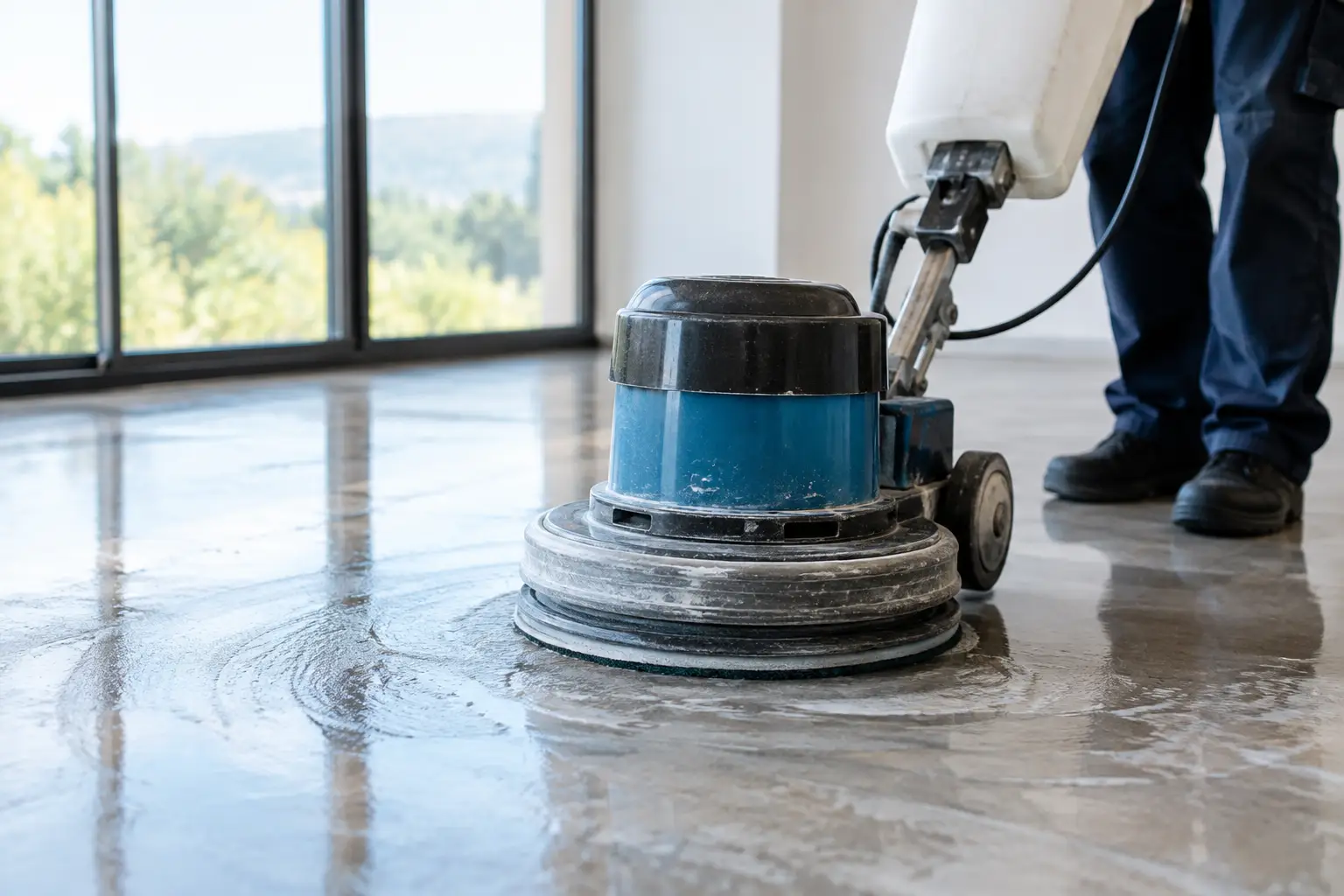
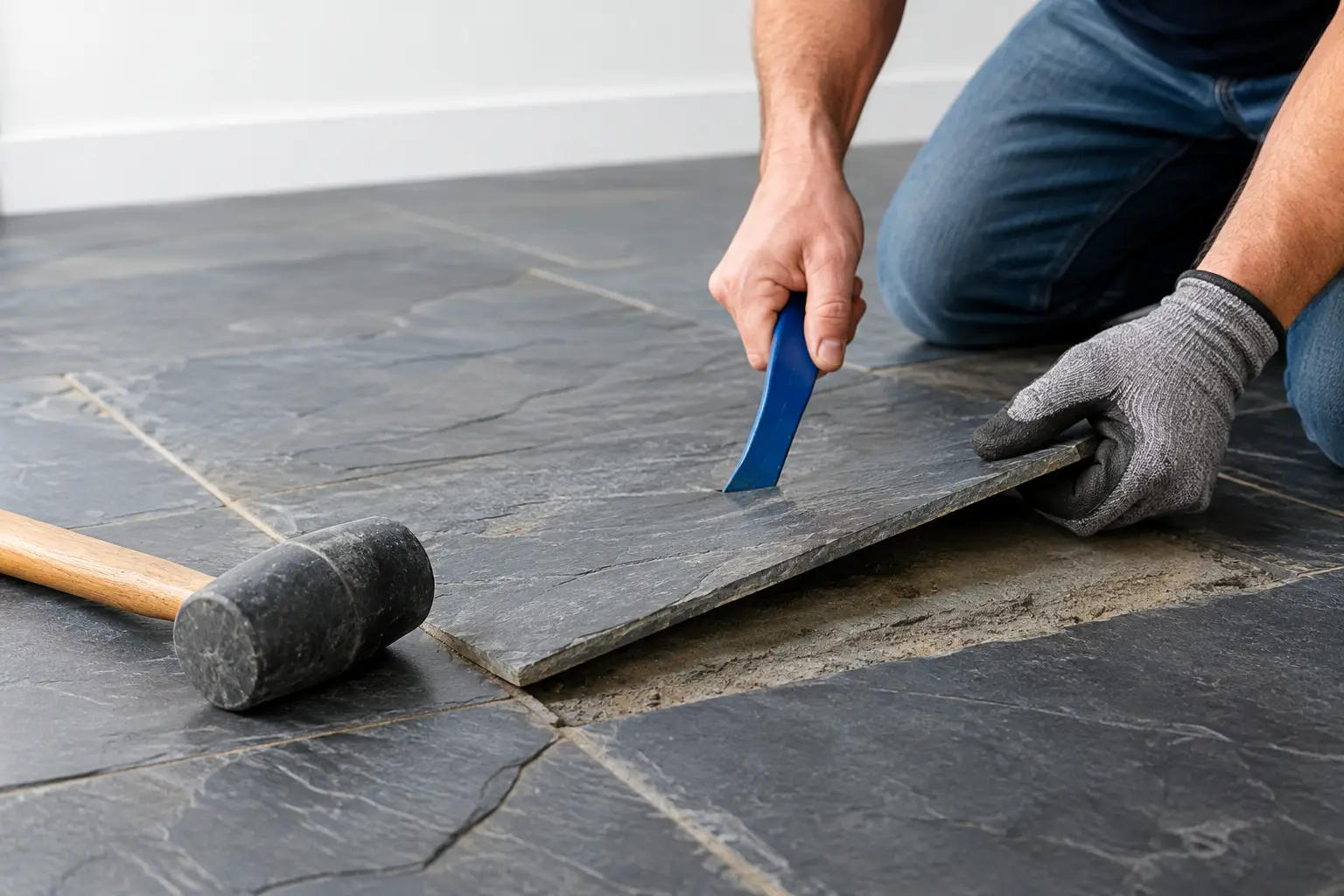
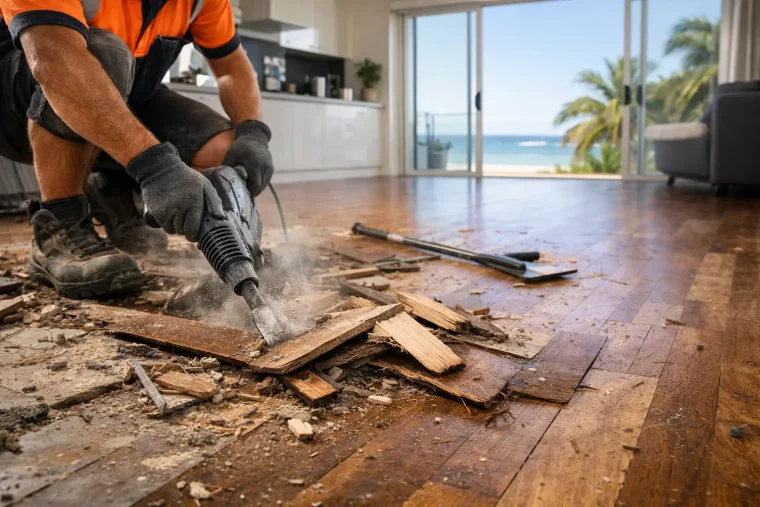
The removal itself needs to be methodical. Boards are lifted, cut or broken out depending on how they were laid. Nails, staples and trims are cleared. Adhesive residue is stripped back where required. If the floor has been glued directly to a slab, mechanical removal often needs to be followed by grinding so the surface is ready for levelling compound, tiling, hybrid planks or another finish.
Why timber floor removal is rarely just about the boards
The visible floor covering is only one part of the job. What sits underneath decides how cleanly the project can move into the next stage.
In plenty of cases, old timber floors hide failed adhesive, uneven concrete, moisture damage, termite-affected framing or leftover material from earlier floor coverings. Once the boards are up, those issues need to be dealt with properly. If they are ignored, the next installer inherits the problem and the job slows down.
This is where specialist removal matters. A general labour approach can get material out, but it does not always leave the site ready. A specialist crew looks at the full preparation phase – removal, strip back, adhesive clearance, grinding where needed, and a tidy work area that lets the next trade start without redoing half the job.
Common challenges in timber floor removal Sunshine Coast projects
Direct-stick timber over concrete
This is one of the tougher removals. Once boards are bonded hard to a slab, pulling them up is only half the work. The adhesive can be more difficult than the timber itself. Some products come away in chunks. Others smear across the surface and need grinding to achieve a usable finish.
The trade-off here is speed versus final surface condition. Fast rough removal may clear the boards quickly, but if the slab is left with ridges, glue and damage, the project still is not ready. Proper floor prep after removal is what makes the difference.
Older floors with mixed fixings
Older homes often have timber flooring installed, repaired and patched over decades. You might find nails in one section, screws in another, and old adhesive near doorways or kitchen areas. These jobs take experience because the removal method needs to adjust as the floor changes.
Handled badly, mixed fixing systems can damage subfloors, create trip hazards and leave a lot of clean-up for later. Handled properly, they can still be removed efficiently without turning the site into a mess.
Commercial and tenanted spaces
In offices, retail sites and hospitality venues, floor removal is not only about technical work. It is about disruption control. Noise, dust management, access planning and rubbish removal all matter.
For these jobs, timing is critical. The best outcome is often a tightly run removal program that clears the floor, manages debris and leaves the area ready for reinstatement or fit-out with as little downtime as possible.
What a professional result actually looks like
A proper timber floor removal job should leave more than an empty room. It should leave a surface and site condition that helps the next stage happen on time.
That means the timber is fully removed, waste is cleared, protruding fixings are gone, loose material is stripped out and the substrate is assessed honestly. If grinding or further surface preparation is needed, that should be identified early rather than after the installer arrives.
Clean execution matters here. No one wants to book painters, cabinetmakers or floor installers only to discover the slab still has glue lines, high spots and damage from rushed demolition. The best result is practical – the room is safer, cleaner and closer to ready.
When DIY timber floor removal becomes expensive in other ways
There are jobs where a few floating boards in a small room can be removed by the owner without much trouble. But many timber floor removal jobs become harder once the first row is lifted.
The usual problems are hidden fixings, hard-set adhesives, damaged underlay, dust, disposal volume and fatigue. Then there is the risk of damaging skirting, door jambs or the substrate itself. On upper-level units and tight-access homes, getting material out is often a bigger task than people expect.
The other issue is time. A job that drags across several weekends can hold up the whole renovation. For builders and investors especially, lost time can matter more than the removal work itself. Fast, controlled removal keeps the schedule intact and reduces the chance of follow-on trades being pushed back.
How to prepare for timber floor removal
If you are booking timber floor removal on the Sunshine Coast, a bit of planning helps the job run cleanly. The area should be cleared of furniture and fragile items, and access needs to be sorted before work starts. In units, that can include lift access, loading zones and body corporate requirements. In commercial sites, it may involve after-hours scheduling or staged work areas.
It also helps to be clear on what comes next. If new tiles, vinyl planks, carpet or timber are being installed, the required substrate finish may differ. Some floors can tolerate minor variation. Others need a much tighter, cleaner base. Knowing the next floor finish allows the removal and prep work to match the end goal.
This is where a specialist operator brings real value. The job is not treated as simple demolition. It is treated as preparation for what comes next.
Choosing the right team for the job
Not every contractor who can remove a floor is set up to do it well. Timber floor removal works best when the team has the right equipment, understands difficult adhesives and fixings, and knows how to leave a site renovation-ready rather than half-finished.
Look for a crew that speaks plainly about process, timing, dust control and substrate condition. Experience across residential and commercial sites matters because access, floor types and project pressures vary. A good operator will not overcomplicate the job, but they also will not pretend every floor is identical.
Rapid Stripped works in that specialist space – removing difficult floor coverings, handling demanding strip-outs and preparing surfaces so the next trade can get on with the job.
Why speed matters, but only when the finish is right
Fast turnaround is valuable. Most clients want the floor out and the project moving as soon as possible. But speed only helps when the removal is complete and the substrate is left in the right condition.
A rushed job can create more downtime than it saves. Missed adhesive, gouged concrete, leftover fixings and poor clean-up all come back later. Real efficiency means getting in, removing the timber properly, managing the mess, and handing over a site that is genuinely ready for the next step.
That is the standard worth looking for in timber floor removal Sunshine Coast projects. Not just a stripped room, but a job done properly the first time, with no fuss and no avoidable hold-ups.
If your renovation timeline matters, the smartest move is to treat floor removal as a specialist stage, not just a tear-out. That way the room does not just look cleared out – it is actually ready to move forward.