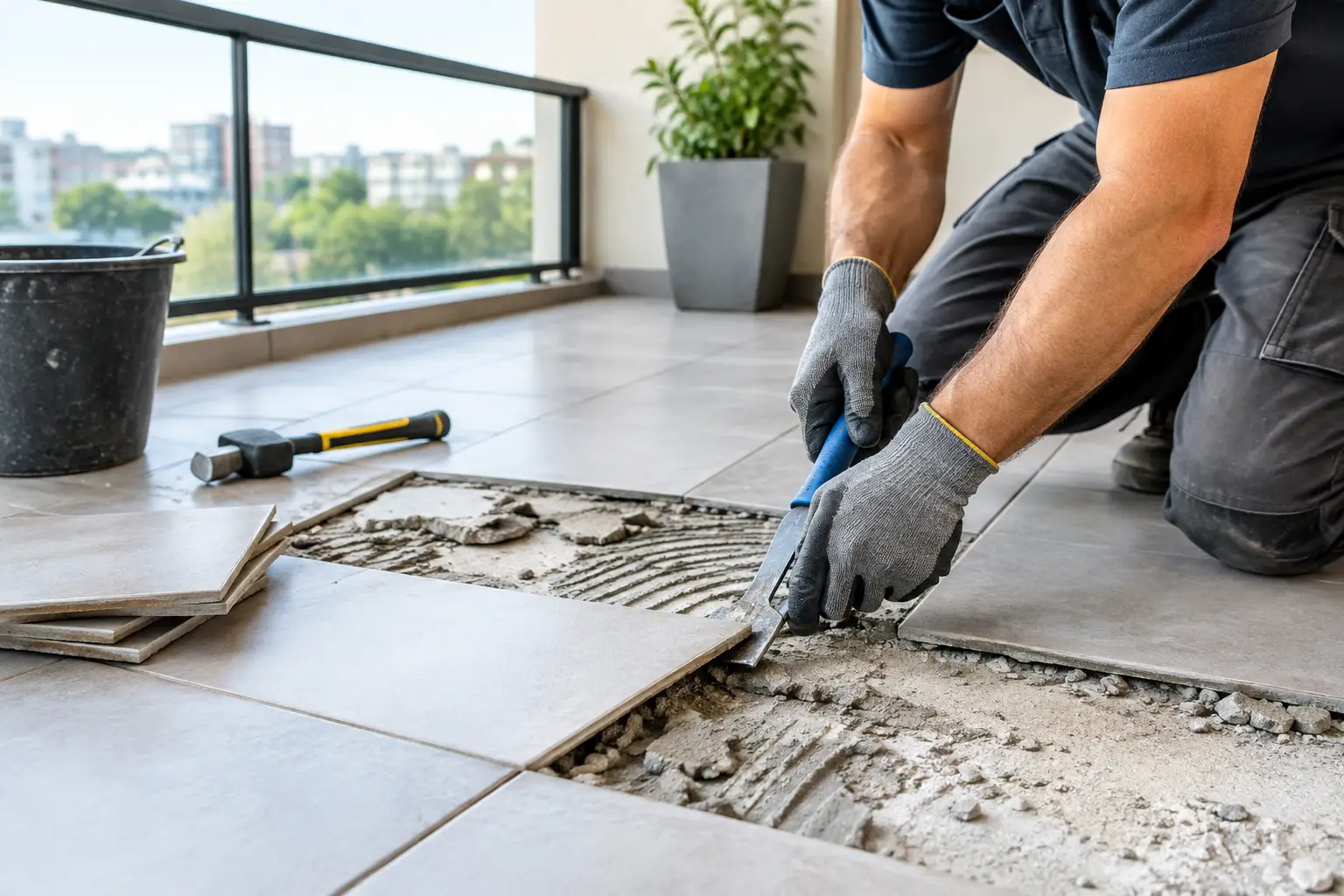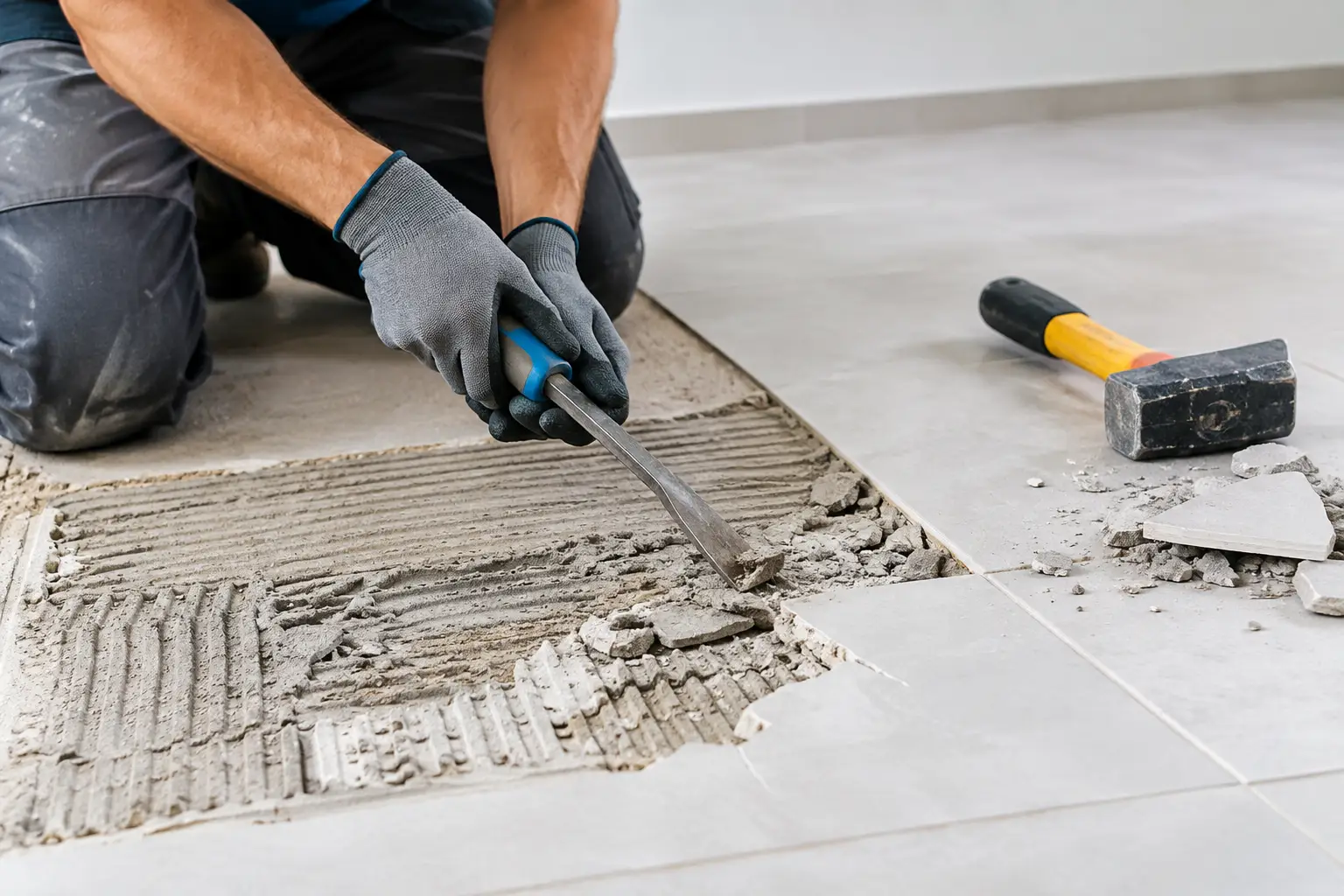

A tiled floor can look straightforward until the first few square metres come up. Then the real job shows itself: hard bedding, stubborn adhesive, uneven concrete and sharp debris everywhere. The best tools for tile removal are not simply the biggest or loudest tools available. They are the tools matched to the tile, the substrate and the finish required for the next trade.
For a small splashback repair, hand tools may be enough. For a bathroom, kitchen, retail tenancy or full-home renovation, the wrong equipment can turn a one-day strip-out into days of dust, damaged slab and costly delays. Here is what works, where each tool earns its place, and when it is smarter to bring in a specialist removal crew.
Start with the Tile, Bedding and Substrate
Tile removal is never just about breaking tiles. Porcelain, ceramic, terracotta, slate and marble all behave differently under impact. Some release in large pieces. Others fracture into sharp fragments while leaving most of their adhesive bed behind.
The substrate matters just as much. Tiles laid over a concrete slab usually need a different approach from tiles fixed to fibre cement sheeting, timber flooring or an upstairs screed. Older installations can have thick cement bedding that is harder to remove than the tile itself. Newer tiles may sit on a thin but exceptionally tough adhesive.
Before choosing equipment, establish three things: how firmly the tile is bonded, what sits underneath it, and whether the surface must be left clean and level for new flooring. A tool that lifts tile quickly but scars the slab is not the right tool when vinyl, hybrid flooring or polished concrete is going in next.
Best Tools for Tile Removal on Floors
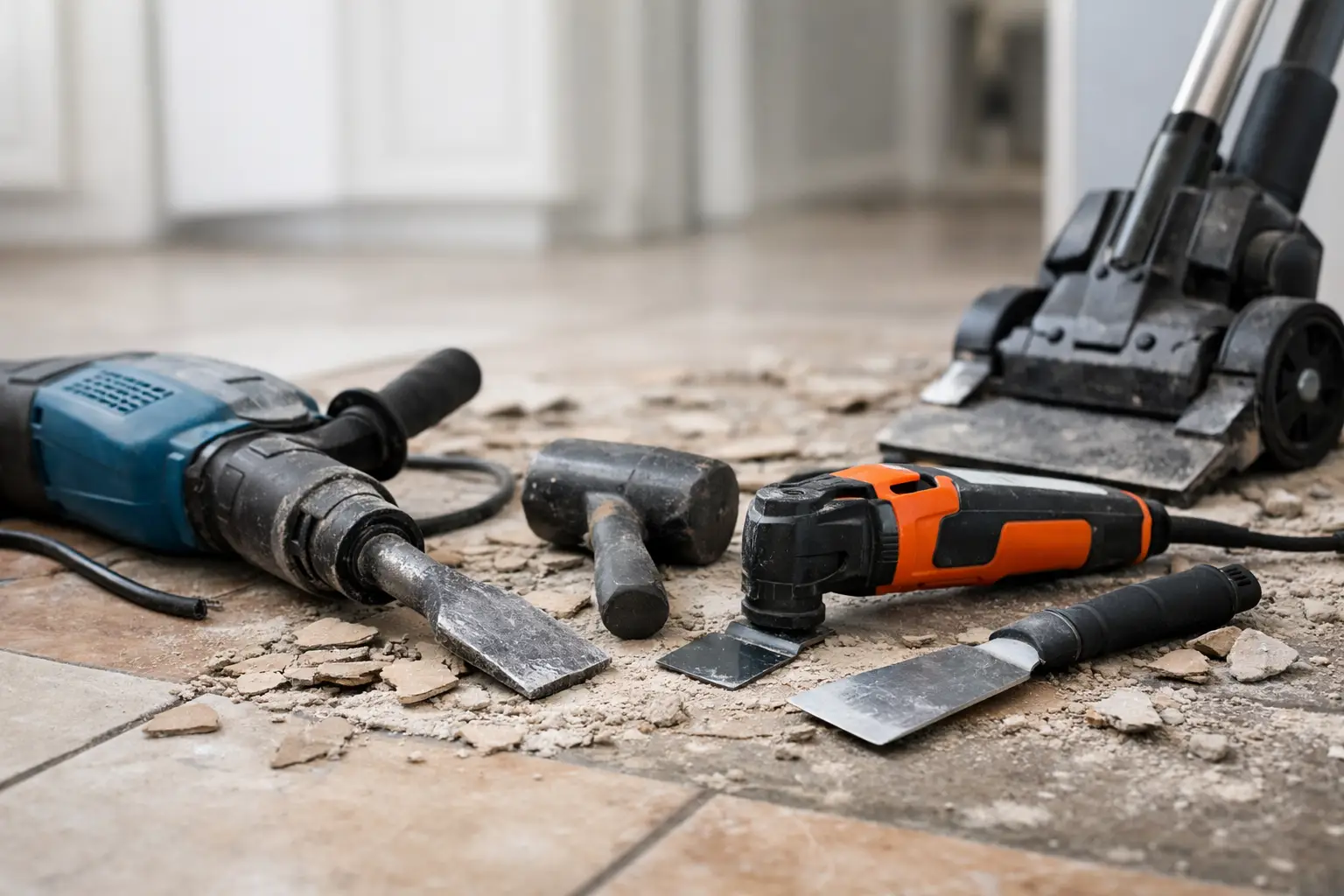
Demolition hammer with a wide tile chisel
For most bonded floor tiles, an electric demolition hammer fitted with a wide, angled tile chisel is the workhorse. The blade gets under the tile and applies repeated impact at a low angle, helping lift sections without driving straight down into the substrate.
This is generally the right starting point for bathrooms, kitchens and larger tiled living areas. A quality demolition hammer has enough force to break adhesive bonds without requiring the operator to swing a sledgehammer all day. It is faster, more controlled and far less punishing on the body.
The trade-off is that it takes skill. Hold the chisel too steeply and it can gouge concrete, crack cement sheeting or punch through a weak subfloor. Work too flat and it may skate across the surface. Experienced operators adjust the angle, pressure and chisel width as conditions change across the floor.
Rotary hammer for edges and confined areas
A rotary hammer is smaller and lighter than a full demolition hammer, making it useful around door jambs, toilet pans, cabinetry and tight bathroom corners. With a narrow chisel attachment, it can remove individual tiles or open up a starting point where a larger machine will not fit.
It is not the fastest option for a large floor, but it is valuable for detailed work. It also gives better control around plumbing penetrations and wall junctions, where a heavy demolition hammer could do more harm than good.
Long-handled floor scraper
Once loose tiles and larger fragments are cleared, a long-handled floor scraper helps remove smaller pieces, thin adhesive ridges and loose bedding. It is a simple tool, but it saves time when used at the right stage.
A scraper will not remove thick cement bed or hard-set adhesive by itself. Trying to force it through heavy material usually wastes effort and puts strain on the operator. Use it for clean-up between passes with powered equipment, not as a replacement for the right removal machine.
Heavy-duty floor stripper for stubborn coverings
A powered floor stripper is designed to work a wide blade under bonded finishes. While it is commonly associated with vinyl, carpet and adhesive removal, the right machine can be highly effective on certain tile systems and underlay materials.
Its advantage is forward pressure and a consistent blade angle across a broad area. On a commercial strip-out, that can improve production and reduce manual labour. However, tile thickness, bedding depth and slab condition determine whether a floor stripper is suitable. Dense porcelain on thick mortar may still require demolition hammer work first.
The Tools That Finish the Job Properly
Removing the visible tiles is only the first half of the work. The surface underneath needs to be ready for the next stage, whether that is waterproofing, screeding, new tiles or a different floor covering.
Concrete grinder with diamond tooling
A concrete grinder fitted with the correct diamond tooling removes remaining adhesive, thinset, bedding residue and high spots. It is the key tool for bringing a slab back to a usable condition after tile removal.
Grinding is particularly important before installing new flooring. Adhesive ridges can telegraph through vinyl and hybrid planks. High spots can make large-format tiles sit unevenly. Leftover contaminants can also affect the bond of new adhesives and levelling compounds.
The wrong grinding setup can create more problems than it solves. Aggressive diamonds can leave deep marks in soft concrete, while unsuitable tooling may polish hard adhesive rather than cut it. The operator needs to assess the material and choose the right bond and grit for the surface.
Edge grinder for walls and corners
Large grinders cannot reach every perimeter. An edge grinder allows the operator to clean close to walls, around columns and under fixed joinery where practical. This detail work is what separates a rough demolition job from a surface properly prepared for the next trade.
It is slower work, but skipping it leaves perimeter adhesive and uneven edges that can cause problems during installation. For bathroom and kitchen renovations, these areas often matter most because waterproofing and new tile lines need a sound, clean base.
Industrial vacuum and dust shrouds
Tile removal and concrete grinding produce significant dust, including respirable silica dust when concrete, mortar or grout is disturbed. Dust extraction is not an optional extra. A grinder should be paired with a properly fitted dust shroud and a suitable industrial vacuum with effective filtration.
Good dust control protects workers, occupants and adjoining spaces. It also keeps the site easier to assess as work progresses. On occupied homes, offices, retail spaces and units, containment and extraction can make the difference between a controlled strip-out and a clean-up problem that spreads well beyond the work area.
Wall Tile Removal Needs More Control
Wall tiles require a more careful approach than floors, especially in bathrooms and kitchens. Behind the tile may be plasterboard, fibre cement sheet, waterproofing membrane or masonry. A heavy-handed method can damage the wall lining, compromise waterproofing or create extra rectification work.
A rotary hammer with a narrow chisel, hand bolster and hammer are often the better combination for wall tile removal. Start from an exposed edge or a deliberately removed tile, then work across in controlled sections. For some renovations, removing the wall lining with the tiles still attached is more efficient and produces a cleaner result. It depends on the condition of the wall, the renovation scope and what needs to remain in place.
Essential Safety Gear Is Part of the Tool Kit
Tile removal is loud, dusty and physically demanding. Broken tile is sharp, and hidden services can sit close to the work area. At a minimum, the job calls for proper respiratory protection, safety glasses, hearing protection and cut-resistant gloves. Steel-cap boots, long clothing and knee protection are also practical on most floor removal jobs.
Before any demolition begins, isolate services where required and check for pipes, cables, floor heating and other concealed elements. In apartments, commercial sites and occupied buildings, noise limits, access conditions, rubbish removal and dust containment need planning before tools start up.
When Hiring Tools Stops Making Sense
Hiring a demolition hammer may appear to be the quick answer for a small area. It can be, provided the tile is lightly bonded, the slab does not need extensive grinding and you have the time to manage debris and clean-up.
The equation changes quickly on larger or more difficult jobs. Equipment hire does not provide the operator experience needed to avoid slab damage. It does not remove tonnes of tile and bedding from site. It also does not solve the problem of adhesive residue, silica dust or a floor that still needs levelling before the installer arrives.
For full bathrooms, kitchens, commercial tenancies, pool areas and heavily bonded floors, professional removal is often the faster path. Rapid Stripped uses purpose-built removal and grinding equipment to remove difficult coverings, control dust and leave surfaces ready for the next stage of renovation.
Choose Tools Based on the Finished Surface
The best decision is made by working backwards from the finish you need. If new tiles are going down, the aim may be a clean, stable substrate suitable for waterproofing or adhesive. If the space is receiving vinyl, timber or epoxy, flatter slab preparation and complete adhesive removal become more critical.
Do not judge the job by how quickly the first tiles break. Judge it by whether the surface is genuinely ready when the removal work is finished. The right tools, operated with control, keep the renovation moving and prevent the old floor from becoming the next trade’s problem.